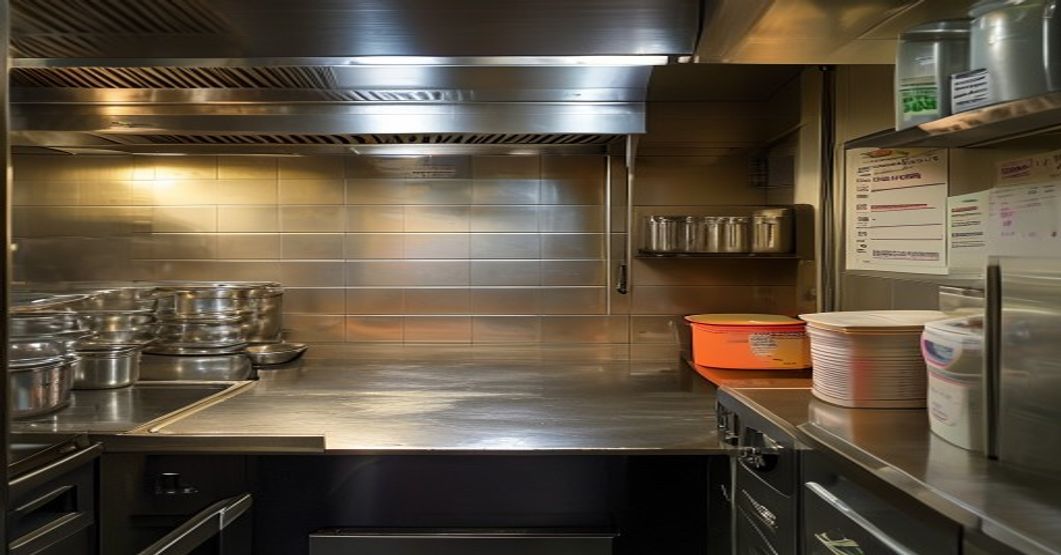
The Rs 2,000 You Lose Every Night Without Noticing
A kitchen that closes sloppy opens sloppy. And a sloppy opening means your first two hours of service are spent fixing problems that should not exist. Unlabeled prep that gets tossed because nobody knows when it was made. A tandoor that was not cleaned and now takes 40 minutes longer to reach temperature. Paneer cubes sitting uncovered in the walk-in, dried out and unusable.
Each of these costs you Rs 300-500. Stack three or four of them on a single morning and you are looking at Rs 1,500-2,000 gone before your first order fires. That is Rs 45,000-60,000 a month. For restaurants running food costs in the 30-35% range, that gap between your theoretical and actual food cost often comes down to what happens between 11pm and midnight. A proper kitchen closing checklist is not paperwork. It is the cheapest insurance policy your restaurant will ever have.
I have seen this pattern in restaurants across Ahmedabad, Surat, and Pune. The menu is solid. The chef is talented. But the profit margins stay stuck at 5-8% because daily operational leakage goes unchecked. The kitchen closing checklist is where you plug the biggest leak first.
What a Kitchen Closing Checklist Actually Covers
A complete kitchen closing checklist covers five areas: food storage and labeling, equipment shutdown and cleaning, waste documentation, station reset for the next day, and security checks. Miss any one of these and you create a problem that compounds overnight. Most restaurants I consult for have some version of a closing routine, but it lives in someone’s head. The moment that person takes a day off, the system breaks.
Write it down. Print it. Laminate it. Pin it next to the pass where your closing team can see it every night. Here is each section broken down.
Food Storage and Labeling
Every container going into the walk-in or reach-in cooler gets a label. Item name, date prepped, use-by date. No exceptions. Cling wrap every container. Rotate stock so older items sit in front. This is FIFO, first in first out, and it is the single most ignored rule in Indian kitchens.
Gravy bases like dal makhani or makhani sauce last 48-72 hours refrigerated. Marinated proteins like tandoori chicken should be used within 24-36 hours for best quality. Prepped vegetables, especially cut onions and tomatoes, degrade fast. Label them with a 24-hour window. If your team is not labeling, your morning shift is guessing. And guessing means either serving subpar food or throwing away perfectly good prep.
Equipment Shutdown and Cleaning
Every piece of equipment gets cleaned and shut down in a specific order. Flat tops and griddles get scraped and wiped while still warm. Fryers get filtered. The tandoor gets its ash removed and the mouth covered. Exhaust hoods get a wipe-down at least three times a week. Refrigerator door gaskets get checked for proper seal.
A commercial refrigerator running with a damaged gasket works 30-40% harder to maintain temperature. That shows up on your electricity bill and shortens the compressor’s life. Replacing a compressor costs Rs 15,000-25,000. A new gasket costs Rs 800-1,500. The kitchen closing checklist catches this before it becomes an emergency.
Waste Documentation
Your closing team must log what was thrown away and why. Not in detail that takes 30 minutes. A simple sheet: item, quantity, reason (expired, burnt, dropped, over-prepped). This takes five minutes. But those five minutes give you data that is worth lakhs over a year.
When you track waste daily, patterns emerge within two weeks. You will see that your kitchen over-preps certain items on slow days. You will see that specific stations waste more than others. You will see which cooks need portion training. Without this data, you are managing food cost blind. And I have written in detail about how this gap between theoretical and actual food cost is where most restaurants bleed out slowly.
Station Reset
Every station should be set up so the morning team walks in and starts prepping within 15 minutes. Cutting boards sanitized and stacked. Knife kits stored properly. Mise en place containers cleaned and ready. Dry storage bins checked for stock levels and sealed tight.
This is where your staff retention connects directly to operations. A morning cook who walks into a trashed station starts the day frustrated. Do that enough times and they leave. Turnover costs you Rs 15,000-30,000 per replacement when you factor in training time and lost productivity. A clean handoff between shifts is a retention tool that costs nothing.
Security Checks
Gas lines off. Pilot lights confirmed off (if applicable). Back door locked. Lights off in storage areas. Walk-in cooler temperature logged. These are not dramatic items. But a gas leak overnight or a walk-in that failed at 1am and nobody noticed until 8am will cost you an entire day’s prep. That is Rs 8,000-15,000 in ingredients for a mid-size kitchen.
How to Build Your Kitchen Closing Checklist in 30 Minutes
Building a kitchen closing checklist takes 30 minutes of focused work. Walk through your kitchen with your head chef after the last order fires. Go station by station. Write down every task that needs to happen before the lights go off. Then organize those tasks into the five categories above.
Here is a framework that works for most Indian restaurant kitchens running 100-300 covers a day.
Food Storage (10-15 minutes): Label and date all prepped items. Wrap and store all proteins. Rotate walk-in stock to FIFO. Check that all containers are sealed. Discard anything past its use-by date and log it on the waste sheet.
Equipment (15-20 minutes): Clean and scrape flat tops. Filter fryer oil. Clean tandoor. Wipe down exhaust hoods (on scheduled days). Check refrigerator temperatures and log them. Wipe down all stainless steel surfaces.
Waste Log (5 minutes): Record all discarded items with quantity and reason. Note any items running low for the morning order.
Station Reset (10 minutes): Clean and sanitize cutting boards. Store knives properly. Clean mise en place containers. Restock dry ingredients at each station. Sweep and mop station floors.
Security (5 minutes): Turn off all gas lines. Confirm pilot lights are off. Lock back door and any external access points. Turn off unnecessary lights. Final walk-through of the kitchen.
Total time: 45-55 minutes for a two-person closing team. That is reasonable. If your closing currently takes 20 minutes, your team is skipping things. If it takes 90 minutes, your workflow needs restructuring.
Why Most Kitchen Closing Checklists Fail Within Two Weeks
The checklist itself is not the hard part. Compliance is. Most restaurants create a beautiful checklist, use it for ten days, and then it becomes wallpaper. Nobody fills it in. Nobody checks it. Here is why that happens and how to prevent it.
No accountability loop. If nobody reviews the checklist the next morning, the closing team learns that it does not matter. Your opening manager or head chef must spend two minutes reviewing last night’s checklist before the morning briefing. Every single day. When the closing team knows it gets reviewed, compliance stays above 90%.
Too many items. A 40-item checklist looks thorough on paper. In practice, your team checks every box without actually doing the tasks. Keep it under 20 items. If you need more detail for specific stations, create a separate deep-clean schedule for weekly tasks.
No sign-off. The closing checklist must have a name and time slot at the bottom. Whoever closes signs it. This is not about blame. It is about ownership. When a problem surfaces the next morning, you know who to talk to and what to fix in the SOP.
If you are running operations through a POS system like Petpooja or Posist, some of these platforms allow you to attach digital checklists to shift close-outs. Use that feature. Digital records are harder to fake than paper ones, and they give you a searchable history when you need to spot patterns.
This connects to a bigger operations truth. Systems only work when there is a human being enforcing them daily. I have covered this principle in detail when discussing why discipline is the foundation of scaling. A checklist without enforcement is just a piece of paper.
The Direct Impact on Your Food Cost and Margins
A properly executed kitchen closing checklist reduces food waste by a measurable amount within the first month. In restaurants I have consulted for, the gap between theoretical and actual food cost typically narrows by 2-4 percentage points once closing SOPs are enforced consistently. On a restaurant doing Rs 10 lakh per month in revenue, a 3-point improvement in food cost puts Rs 30,000 back into your pocket. Every month.
That is money you did not have to earn through more covers or higher prices. You already earned it. You were just losing it between the last order and the locked door.
The compounding effect matters too. Better food storage means fewer morning surprises. Fewer morning surprises mean faster prep. Faster prep means your kitchen is ready 15-20 minutes earlier. That directly affects your lunch service throughput, especially if you are running tight turnaround times in a dine-in format.
For cloud kitchen operators, the impact is even more direct. You do not have ambiance or service to fall back on. Your product is the food, and your margin is the operation. A cloud kitchen running 28% food cost instead of 32% on Rs 15 lakh monthly revenue keeps an extra Rs 60,000. That is often the difference between a profitable brand and one you are thinking about shutting down.
How to Connect Closing SOPs to Your Inventory System
Your kitchen closing checklist becomes twice as powerful when it feeds into your inventory counts. The waste log from closing should reconcile with your daily consumption report. If your POS says you sold 40 portions of biryani and your yield from 10 kg of rice should give you 42 portions, but your closing waste log shows 5 portions discarded, you now know exactly where Rs 750 went.
This is how professional operations work. Not through monthly stocktaking where you discover a Rs 50,000 variance and have no idea what happened. But through daily micro-reconciliation where the closing checklist is the last data point of the day.
If you are serious about your cash flow, start treating the kitchen closing checklist as a financial document, not a housekeeping one. Every item on that waste log is a line item on your P&L. Every unlabeled container that gets tossed the next morning is money you already spent on ingredients, labor to prep them, and gas to cook them.
When you price your menu, you build in a target food cost. The kitchen closing checklist is what protects that target from erosion every single night.
Start Tonight, Not Next Monday
You do not need a consultant or a fancy system to start. Tonight, walk your kitchen after the last order. Bring a notebook. Write down everything that should happen before your team leaves. Organize it into the five categories. Print it tomorrow. Start using it tomorrow night.
Review it every morning for the first two weeks. Adjust based on what your team actually struggles with. Add items if you find gaps. Remove items that do not apply to your format. By week three, your closing team should be completing the checklist in under an hour without supervision.
Then measure the impact. Pull your food cost percentage from the last 30 days. Run the checklist religiously for 30 days. Pull the numbers again. The improvement will show up. It always does.
Stop guessing. Start building. Get Design Dine Dominate, the complete restaurant business playbook from someone who has actually done it.

Leave a comment