The Accepted Belief: Opening Checklists Drive Restaurant Performance
Every restaurant operations manual in India starts with the opening checklist. Turn on the exhaust. Check burner flames. Confirm prep quantities. Verify POS is online. Count the cash drawer. This is treated as the single most important daily ritual in restaurant operations.
Consultants emphasize it. Training programs build around it. Franchise SOPs dedicate pages to it. And operators across Ahmedabad, Pune, Surat, and Bengaluru spend their energy making sure mornings run tight.
But the opening checklist is not where your money disappears. Your restaurant closing checklist is.
Why Your Restaurant Closing Checklist Matters More Than Your Opening
Opening failures get caught within minutes. A broken burner gets flagged before the first order fires. Missing mise en place is visible the moment a cook reaches for it. The lunch rush forces corrections in real time because customers are waiting and Swiggy orders are pinging.
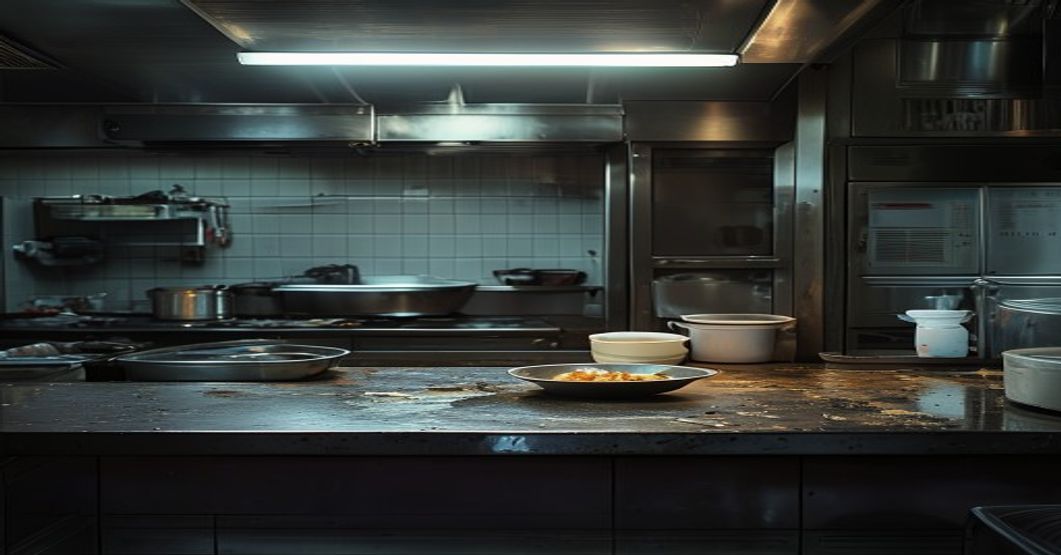
Closing failures are invisible. They compound silently overnight and show up as inflated costs on your P&L weeks later. No one is watching at 11:30pm. The kitchen team is tired. The manager wants to go home. And every shortcut taken during closing becomes tomorrow’s expense.
According to Prajwal Soni’s analysis across cloud kitchen and dine-in operations, a restaurant doing Rs 8 lakh per month in revenue can lose Rs 40,000 to Rs 60,000 monthly from poorly executed closings alone. That is 5-7% of revenue vanishing every night in small, invisible increments. For a business where healthy net margins sit between 10-15%, losing 5-7% to sloppy closings is the difference between a profitable restaurant and a struggling one.
Where the Restaurant Closing Checklist Fails Every Night
The specific closing failures that cost money fall into five categories. Each one feels minor in isolation. Together they drain your margins consistently.
Uncovered prep and walk-in mismanagement
Prep left uncovered in the walk-in cooler oxidizes, dries out, or absorbs odors overnight. That tray of sliced paneer your cook left without cling wrap? It develops a skin by morning. The marinated chicken sitting in an open container next to cut onions? Cross-contamination waiting to happen.
I have seen kitchens in Gujarat throw away Rs 800 to Rs 1,200 worth of prepped ingredients every morning simply because closing staff did not label, cover, and organize the walk-in properly. Multiply that by 30 days. That is Rs 24,000 to Rs 36,000 per month in waste from one single closing failure. Your cash flow takes the hit before you even realize where the money went.
Equipment left running or improperly shut down
Fryers left at holding temperature overnight shorten oil life by one full cycle. If you are changing oil every 4 days instead of every 5, that is roughly 6 extra oil changes per month. At Rs 800 to Rs 1,500 per oil change depending on fryer size and oil quality, the numbers add up fast.
Exhaust systems left running waste electricity. Tandoors not properly banked burn excess gas. Refrigerator doors left slightly ajar force compressors to overwork, increasing both energy costs and equipment wear. None of these show up as a line item on any daily report. They just quietly inflate your monthly operating expenses.
No waste logging at end of day
Most Indian restaurants log waste when they notice it during service. Almost none log waste during closing. But closing is when you discover the real picture. The dal makhani that did not sell. The biryani rice that over-hydrated. The gulab jamun that has been sitting in sugar syrup for three days. If your closing team is not weighing and logging this waste nightly, your menu pricing is based on fictional food costs.
Cash and inventory reconciliation skipped
End-of-day cash counts and inventory spot checks catch theft and errors within hours instead of weeks. When closing staff skips this step, discrepancies accumulate. A missing Rs 200 per night becomes Rs 6,000 per month. Three missing packets of cheese per week becomes a food cost variance your POS system like Petpooja or Posist flags eventually, but by then you have lost lakhs over multiple months.
Cleaning that looks done but is not done
Surfaces wiped but not sanitized. Drains not flushed. Grease traps not checked. Floor mopped but corners ignored. This is not about hygiene audits. This is about FSSAI compliance, pest control costs, and equipment lifespan. A restaurant that cleans properly at closing spends less on pest control, passes audits without scrambling, and keeps equipment functioning longer. A restaurant that fakes closing cleaning pays for it in repair bills and health inspector visits.
Why Operators Obsess Over Openings and Ignore Closings
The bias toward opening checklists exists for a psychological reason, not a business one. Operators are present during openings. They walk in fresh, energized, ready to inspect. The morning feels like a controllable moment.
Closings happen when operators are either gone or exhausted. The shift manager handles it. Or more commonly, a senior cook or the most junior staff member handles it. There is no audience for closing work. No one photographs a perfectly organized walk-in at midnight the way they photograph a clean kitchen before service.
This is exactly why staff accountability systems matter more at closing than opening. Your morning gets checked by customer pressure. Your closing gets checked by no one unless you build the system for it.
What a Restaurant Closing Checklist Should Actually Contain
A proper closing checklist is not a laminated sheet on the wall that staff ignores. It is a timed, verified, photographed sequence of tasks with accountability attached to each step. Here is what operators running 15%+ net margins actually enforce at closing.
Walk-in cooler audit (10 minutes): Every container labeled with item name, date, and quantity. Everything covered. Nothing on the floor. Temperature logged. Door seal checked. This single step prevents the majority of overnight waste.
Equipment shutdown sequence (15 minutes): Fryers drained and cleaned, not left at holding temp. Tandoor properly banked. Exhaust off. All burners confirmed off. Refrigerator temps logged. This protects equipment life and controls energy costs.
Waste log (5 minutes): Every item discarded, weighed and recorded. This feeds directly into your actual food cost calculation. Without nightly waste data, the gap between your theoretical and actual food cost will always remain a mystery. Restaurants I have consulted for typically see a 3-7 percentage point gap between theoretical and actual food cost, and closing waste is one of the biggest contributors.
Cash reconciliation (10 minutes): Cash drawer counted against POS totals. Discrepancies noted immediately, not discovered during next-day opening. If you are running your numbers through a system like Petpooja, the variance report should be generated at closing, not the next morning.
Cleaning verification (15 minutes): Not just “is the floor mopped” but documented checks. Drain flush. Grease trap status. Sanitizer concentration verified. A photo of the clean kitchen timestamped and sent to the manager. This is how cloud kitchen operators running multiple brands from one kitchen maintain standards even without an owner on-site.
Security check (5 minutes): Gas lines off. Back door locked. CCTV recording confirmed. Fire suppression system armed. This is not just safety. Insurance claims get denied when operators cannot prove basic closing security protocols were followed.
How to Make Your Closing Checklist Actually Get Followed
A checklist only works if there is a consequence for skipping it and a verification method that does not depend on the person doing the work to also confirm they did it. Self-reporting is useless.
Three methods that work in Indian restaurant operations:
Photo verification via WhatsApp group. Closing staff sends timestamped photos of the walk-in, the clean line, the equipment in off position, and the waste log to a designated WhatsApp group. The manager or owner checks these photos that night or first thing in the morning. Simple. Free. Works in every city from Nagpur to Hyderabad.
Rotating closing responsibility. Do not let the same person close every night. When one person owns closing permanently, shortcuts become habits. Rotate closing duty among your senior staff. Each person knows someone else will open the kitchen tomorrow and see exactly what they left behind.
Morning cross-check built into the opening checklist. Your opening checklist should include five specific verification items that check last night’s closing quality. Walk-in organization, equipment status, waste log completeness, cash reconciliation accuracy, and cleaning standards. When the opening team reports closing failures, you have a feedback loop that creates accountability. This is how operators who scale successfully build systems that self-correct.
Fix Tonight, Not Tomorrow Morning
Prajwal Soni, restaurant business consultant, notes that most operational improvements in restaurants get scheduled for tomorrow. New SOP starts Monday. Training happens next week. Menu update next month. But your closing checklist can be fixed tonight. Literally tonight.
Here is your action for this week. Go to your restaurant at closing time three nights in a row. Do not announce it. Just show up at the last 45 minutes of the shift. Watch what happens. Watch what gets skipped. Watch where the shortcuts are.
Then build your closing checklist around what you actually see, not what you assume happens. Print it. Assign it. Verify it with photos. Track the waste log against your weekly food cost for 30 days.
You will find money you did not know you were losing. Most operators I work with recover Rs 25,000 to Rs 50,000 per month within the first four to six weeks of enforcing a proper closing system. That is margin you are currently leaving on the kitchen floor every single night.
Your mornings are already fine. Your profitability lives or dies in the last 45 minutes of every shift. Fix the close.
Stop guessing. Start building. Get Design Dine Dominate, the complete restaurant business playbook from someone who has actually done it.

Leave a comment