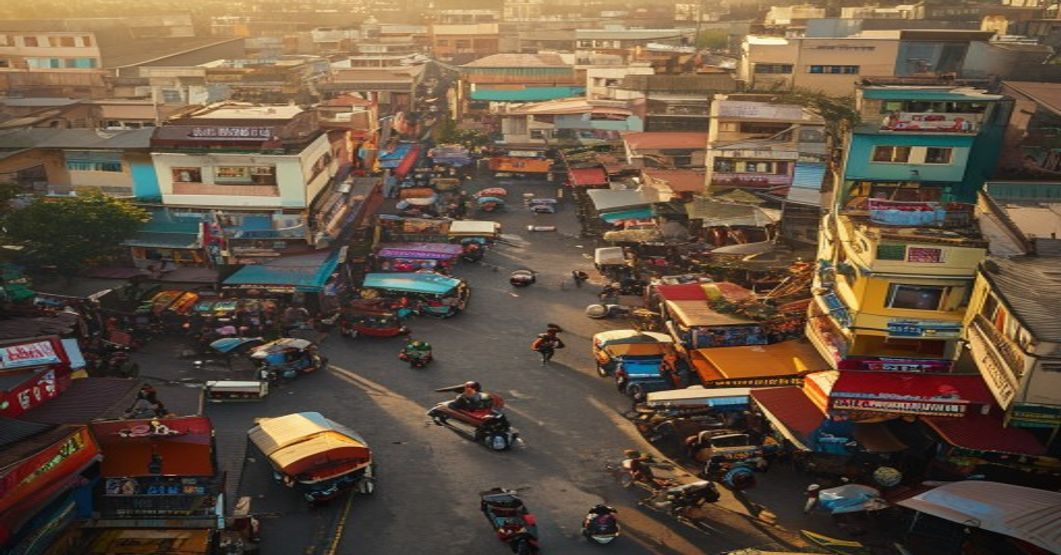
You signed a 3-year lease in a busy part of Ahmedabad. The road has traffic. There is a college nearby. Two office complexes sit within 1.5 km. Rent is Rs 1.8 lakh a month, and you thought that was reasonable. Six months in, your weekday lunch covers are 40% below projection. Dinner does slightly better, but not enough. You blame Swiggy commissions, your chef, the weather. You never once blame the location. Because it looks like a good location. But you never actually studied your catchment area. You never walked it. You never counted who lives there, who works there, what they earn, what they eat, and when they move. A proper catchment area analysis for your restaurant would have told you this location was wrong before you spent a single rupee on interiors.
What Does a Catchment Area Actually Mean for a Restaurant?
A catchment area is the geographic zone from which your restaurant draws most of its customers. For dine-in, this is typically a 1-3 km radius. For delivery, it extends to 5-7 km depending on the platform. The composition of people inside this zone determines your revenue ceiling. Not your food. Not your marketing. The zone itself.
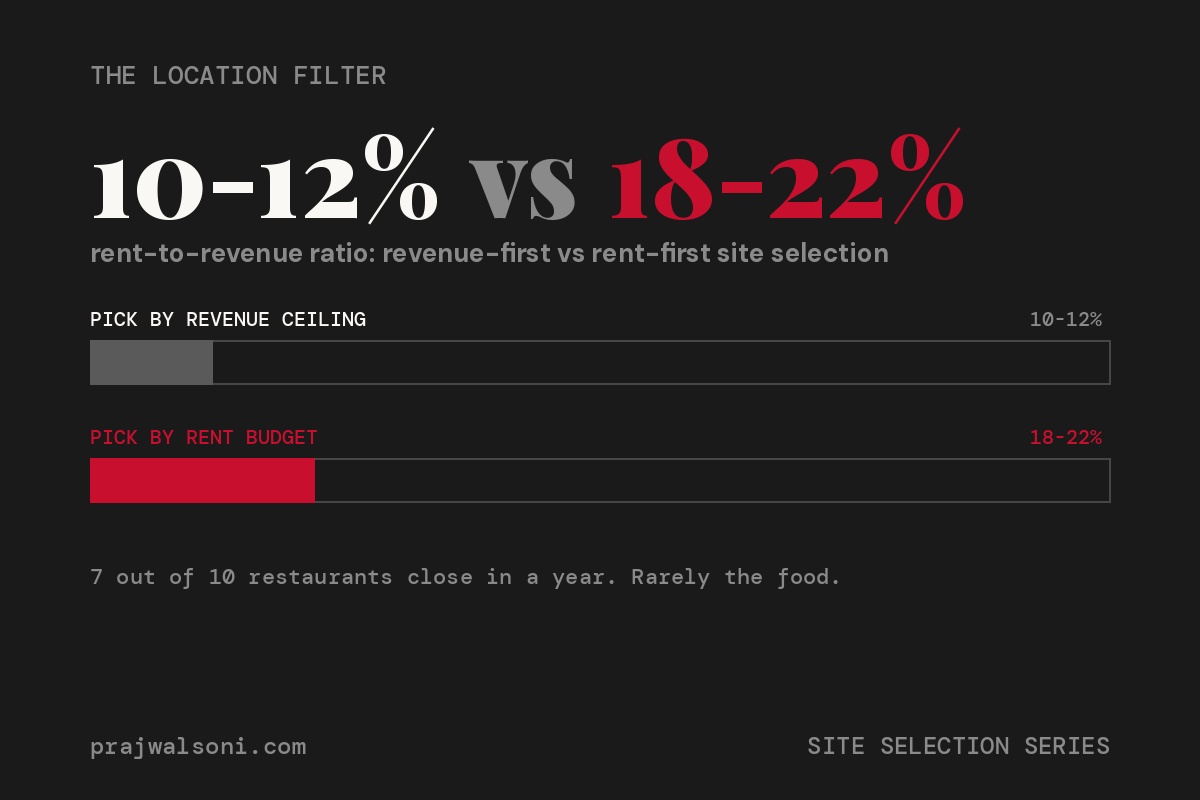
Most operators pick locations using three inputs: rent they can afford, a busy-looking road, and a gut feeling. None of these are catchment analysis. A proper study looks at residential density, office density, income brackets, existing competition, footfall patterns by hour, and delivery order volumes from the same pin code on Swiggy and Zomato.
I have consulted for restaurants in Surat, Pune, and Nagpur where the operator picked a location on a national highway because “the traffic is insane.” Highway traffic does not stop to eat at your restaurant. It drives past. Footfall and traffic are different things, and confusing them is one of the most expensive mistakes in this business.
The Before: What Happens When You Skip Catchment Area Analysis
You are running a North Indian restaurant in a Tier 2 city. Rent is Rs 1.5 lakh. You do about 120 orders a day. Your Zomato rating is 4.1. Staff cost runs around Rs 2.2 lakh a month. Food cost is 34%. You are doing roughly Rs 9-10 lakh in monthly revenue. After rent, staff, food cost, packaging, GST, and aggregator commissions, you are left with maybe Rs 40,000-60,000. That is not a salary. That is survival money for a business that took Rs 25-30 lakh to set up.
The root problem is not your food cost, although your menu pricing probably needs work too. The root problem is your location cannot support the revenue you need. The residential density within 2 km is mostly lower-middle-income housing. Average order value on delivery is Rs 280. The office crowd nearby is small, maybe 800-1,000 people, and half of them bring lunch from home. Your dinner crowd is thin because families in this income bracket eat out once or twice a month, not twice a week.
You did not know any of this because you never walked the 2 km circle around your restaurant before signing the lease. You drove past it. You saw activity. You assumed activity meant customers.
Why Does a Bad Catchment Area Kill Revenue Slowly?
A bad location does not announce itself. It bleeds you slowly. Month one feels like a ramp-up. Month three feels like a plateau. Month six, you start discounting on Zomato to push volume, which increases your effective commission cost while dropping your margins. By month nine, you are stuck in a lease you cannot exit without paying 3-6 months of penalty rent.
The NRAI India Food Services Report 2024 puts the failure rate of new restaurants at roughly 60% within the first year. Location mismatch is a primary driver, not the only one, but a primary one. Because location is the one variable you cannot change after you open. You can fix your menu. You can retrain your staff. You can renegotiate with vendors. But you cannot pick up your kitchen and move it 3 km east where the catchment is better.
The After: What Changes When You Actually Study Your Catchment
Picture the same operator, same concept, same budget. But this time, before signing, they spent two weeks doing actual groundwork. They walked the 2 km radius. They counted residential societies and estimated household count. They checked Google Maps for office buildings and called a few to ask how many employees work there. They sat at a chai stall near the proposed location at 8 AM, 1 PM, and 7 PM on a weekday and a weekend. They counted foot traffic moving in different directions.
They pulled up Swiggy and Zomato for that pin code and looked at how many restaurants already serve the same cuisine. They looked at pricing. They read reviews of competitors to understand what customers in this zone value. They asked the landlord’s previous tenant why they left. They checked if the area has parking for cars and two-wheelers, because in cities like Pune and Ahmedabad, no parking means no dinner walk-ins.
The result: they found a location 4 km away in a mixed commercial-residential zone. Rent was Rs 20,000 higher. But the catchment had three large tech company offices within 1 km, roughly 3,000+ working professionals. Residential density was higher-middle-income. Average order values on delivery platforms for the pin code were Rs 380-420. There were only two competitors serving North Indian, compared to seven at the original location.
Six months in, this restaurant is doing Rs 14-15 lakh a month. The extra Rs 20,000 in rent is irrelevant against Rs 4-5 lakh of additional revenue. Net margins are closer to 12-14%, which puts this operator in the healthy range instead of the struggling range.
The Bridge: How to Do Catchment Area Analysis Before Your Next Lease
The mechanism is simple: walk the circle before you sign the paper. Not drive. Walk. Here is the process in a specific, repeatable format.
Step 1: Map Your 2 Km Radius on Google Maps
Drop a pin on the proposed location. Draw a circle. Use a free tool like Google Maps radius tool or CalcMaps. Now list everything inside that circle: residential societies (count towers and approximate units), offices, schools, colleges, hospitals, malls, competitor restaurants. Write it down. Do not trust memory.
For each residential society, estimate the number of households. A 4-tower society with 15 floors and 4 flats per floor is roughly 240 households. If the catchment has 10 such societies, you have about 2,400 households. At an average family size of 4, that is 9,600 people living within your dine-in radius. Now ask: what percentage of these people will eat your food at your price point?
Step 2: Study the Competition Already Serving This Zone
Open Swiggy and Zomato. Set the delivery address to your proposed location. Search your cuisine. Count how many restaurants appear in the first 20 results. Note their ratings, price range, and estimated delivery time. If seven biryani brands already serve this zone with 4.0+ ratings and Rs 250 average prices, your biryani brand needs a very clear reason to exist here.
Competition density tells you about demand saturation. Two competitors with high ratings means proven demand. Eight competitors means the zone is overserved and your acquisition cost per customer will be high. This directly affects your profitability math, especially for cloud kitchens where discovery happens entirely on the platform.
Step 3: Do a Physical Footfall Count at Three Times of Day
Sit near the proposed location. Count people walking past in 30-minute windows at 8 AM, 1 PM, and 7 PM. Do this on a Tuesday and a Saturday. If your concept is lunch-heavy (thali, rice bowls, quick meals), Tuesday 1 PM traffic matters most. If your concept is weekend-heavy (family dining, specialty cuisine), Saturday 7 PM is your number.
Footfall patterns tell you when the zone is alive and when it is dead. Some commercial areas in Bengaluru and Hyderabad are packed at lunch and completely empty by 8 PM. If you are planning a dinner-focused concept, that location will starve you regardless of how good your paneer tikka is.
Step 4: Talk to Existing Operators in the Zone
Walk into 2-3 restaurants already operating within your catchment. Buy a meal. Talk to the manager or owner. Ask how lunch and dinner compare. Ask if weekends are stronger. Ask if they rely more on dine-in or delivery. Restaurant operators are surprisingly willing to share when you are not a direct competitor. A 15-minute conversation gives you data that no report can.
Also ask the landlord’s previous tenant what went wrong. If the space has had 3 tenants in 5 years, that is a signal. The location might have structural problems like poor visibility, difficult access, or parking issues that no amount of marketing can fix.
What Should Your Catchment Area Analysis Checklist Include?
A complete catchment study covers eight factors: residential household count, average income bracket, office employee count, competitor count and rating, footfall by time of day, parking availability, delivery platform saturation for your cuisine, and lease history of the specific property. Skip any one of these and you are making a decision with incomplete data.
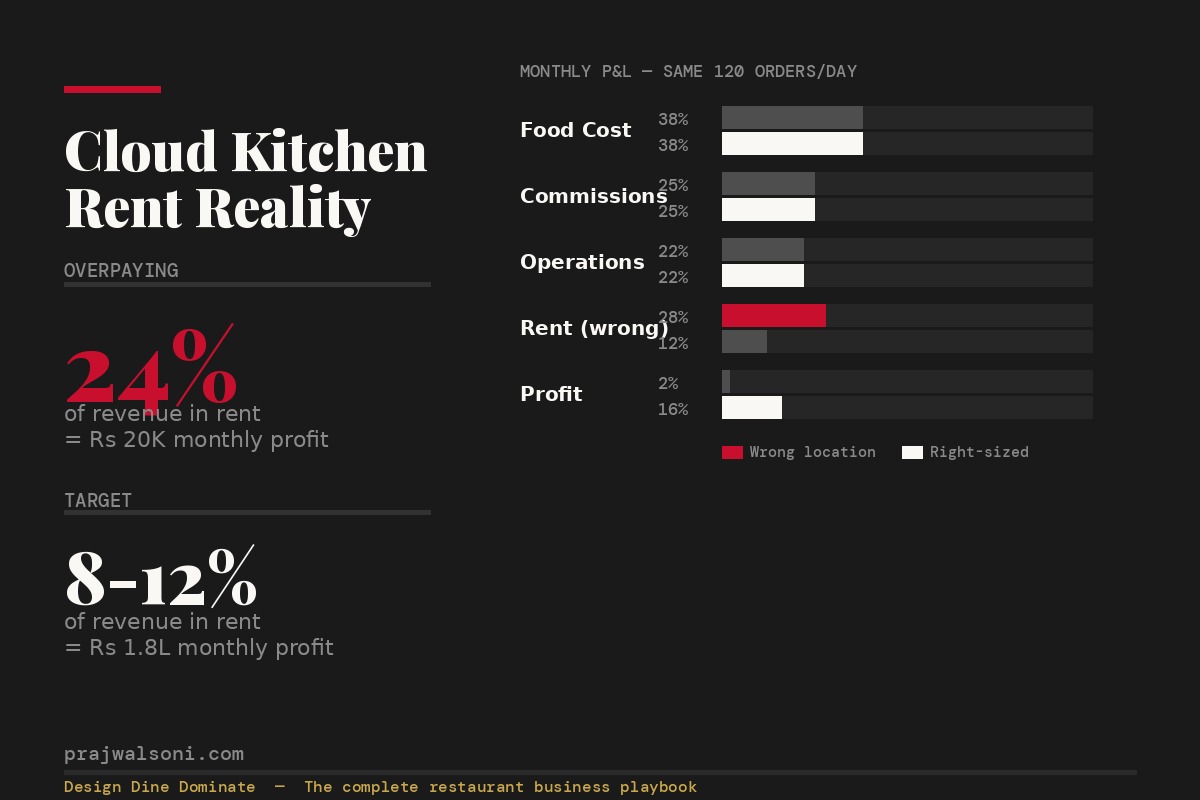
For cloud kitchens, the checklist shifts. Physical footfall barely matters because you have no walk-ins. What matters instead is delivery radius overlap, platform visibility in the pin code, competitor density on Swiggy and Zomato, and whether the zone has enough order volume to sustain your concept. I have covered the specific economics of this in my breakdown of cloud kitchen profitability metrics.
If your concept targets office crowds, you need to verify that those offices actually have 500+ employees per building. A “commercial zone” with 10 small offices of 20 people each gives you 200 potential lunch customers. After accounting for people who bring tiffins, order from competitors, or eat at the canteen, you might be fighting for 60-80 covers. That is not enough.
How Does Catchment Area Analysis Differ for Tier 2 Cities?
Tier 2 cities like Surat, Nagpur, Jaipur, and Indore have tighter catchment dynamics than metros. The paying population is more concentrated in specific zones. A 2 km shift in location can mean the difference between an affluent residential cluster and a wholesale market area with zero dinner demand.
Delivery radii on Swiggy and Zomato also work differently here. Platform coverage in Tier 2 cities is not uniform. Some pin codes have 40+ restaurant options. Others have 8. If your proposed location falls in a pin code with thin coverage, you might actually benefit from lower competition. But if the pin code also has low order volume, fewer options does not mean more orders for you. It means the zone does not order much.
The middle-class growth in Tier 2 cities is real, but it is happening in specific corridors. New residential developments on ring roads, IT park clusters, and areas near new malls. If you place your restaurant in the old city center because rents are lower, you might miss the demographic shift entirely.
Your Catchment Study This Week
If you are already operating, do this exercise for your current location. Walk the 2 km circle this week. Count residential societies. Count office buildings. Sit outside your restaurant for 30 minutes at lunch and 30 minutes at dinner. Count actual foot traffic. Compare what you see against your current daily covers.
If there is a mismatch between catchment potential and your actual revenue, the problem is either concept-catchment fit or execution. Both are fixable, but the diagnosis starts with understanding who is actually around you. Not who you imagined was around you when you signed the lease.
If you are scouting a new location, do not sign anything until you have spent at least 3 days on the ground in that zone. Rs 5,000 worth of chai, meals at nearby restaurants, and time spent counting will save you Rs 15-20 lakh in a failed lease. Understanding cash flow management means knowing which costs you can avoid before they start.
If you are scaling to a second or third location, the stakes are even higher. Every new location is a new catchment bet. Scaling without discipline means multiplying your risk instead of your revenue.
Stop guessing. Start building. Get Design Dine Dominate, the complete restaurant business playbook from someone who has actually done it.

Leave a comment