The Number You Check Every Night Is the Wrong One
You close the register. You check the day’s total. Rs 87,000. You feel good. But that number is gross revenue before Swiggy and Zomato commissions, before discounts you ran, before the Rs 2,400 worth of paneer that went bad in the prep fridge, before GST, before the free meals your staff ate. Your actual retained revenue for the day might be Rs 58,000. Maybe less.
Most Indian restaurant operators I work with check their daily sales report the same way. They look at the top line. They compare it to yesterday. If it went up, they relax. If it went down, they panic. Neither reaction is based on the right number. Your daily sales report restaurant ritual needs a complete rebuild because the report you are reading right now was never designed to show you where money actually goes.
This is not about buying expensive software. This is about knowing which seven or eight numbers to pull every single day, and what each one tells you before it is too late to act. The restaurants I consult for that switched to a proper daily tracking format caught margin leaks within the first two weeks. Not because they got smarter. Because they finally had the right data in front of them.
Why Gross Revenue Is the Most Dangerous Number on Your Report
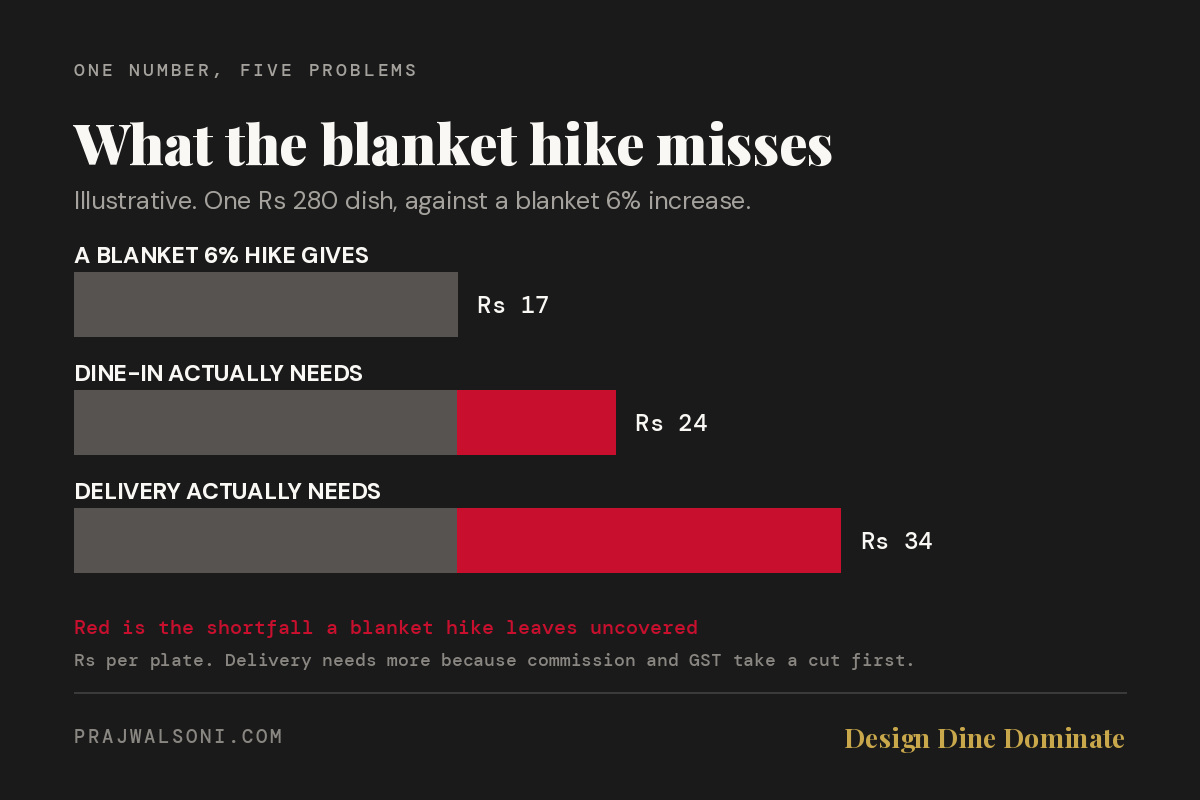
Gross revenue tells you how much food left your kitchen. It tells you nothing about how much money you kept. For restaurants running 30-40% of orders through Swiggy and Zomato, the gap between gross and net revenue is enormous. Aggregator commissions run 15-30% of order value, plus 18% GST on that commission. A Rs 500 order can land Rs 340 in your bank account after all deductions.
Now add the discounts you ran today. Platform-funded discounts are one thing. But operator-funded discounts, the ones where you absorb Rs 75 off on orders above Rs 300, come straight from your pocket. Your POS might show Rs 87,000 in sales. Your bank will see something very different by the time settlement happens.
The fix is dead simple. Your daily report must show three revenue lines, not one. Gross revenue. Total deductions (aggregator commissions, discounts, GST payable). Net retained revenue. If your POS does not split these automatically, do it manually in a spreadsheet for one month. You will be shocked at the gap. Restaurants in Ahmedabad and Surat I have worked with typically discover a 22-35% difference between what they thought they earned and what they actually kept.
The Seven Numbers Your Daily Sales Report Must Include
A useful daily sales report tracks seven numbers that together give you a real picture of the day’s financial health. Miss any one of these and you are flying blind on at least one margin lever.
1. Net Retained Revenue
Gross sales minus aggregator commissions, minus operator-funded discounts, minus GST collected. This is the actual money you have to cover costs and profit. Track it as a separate line from gross sales every single day.
2. Channel-Wise Revenue Split
How much came from dine-in, how much from Swiggy, how much from Zomato, how much from direct orders or phone orders. This matters because each channel has a different margin profile. A Rs 50,000 day where Rs 40,000 came from aggregator orders is very different from a Rs 50,000 day where Rs 40,000 was dine-in. The dine-in day is dramatically more profitable. Track the split so you know where to push harder. If you are not already thinking about reducing aggregator dependence, this number will motivate you.
3. Average Order Value by Channel
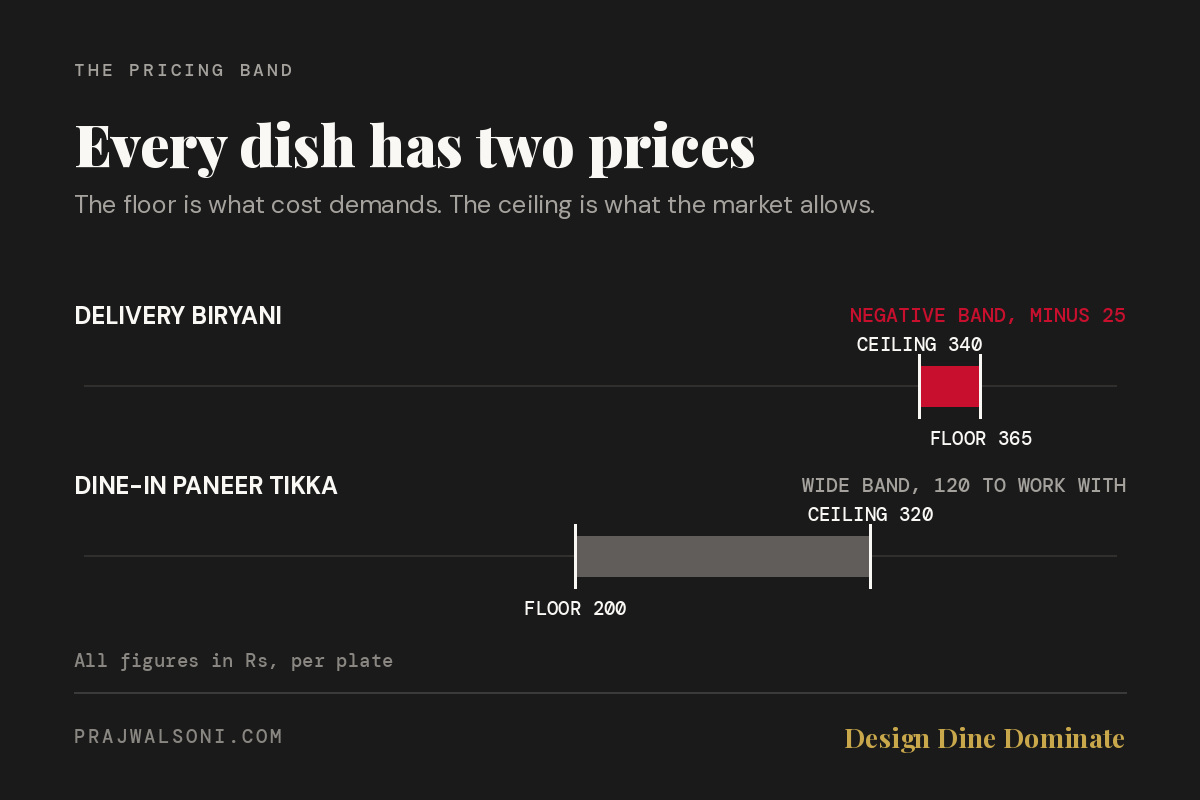
Your dine-in AOV and your delivery AOV are almost never the same. Dine-in typically runs higher because of beverages, starters, and desserts. But if your delivery AOV is stuck at Rs 280-320 while your dine-in AOV is Rs 550, that is a menu pricing problem on your delivery menu. Track AOV by channel daily so you can spot when it drops and fix it fast.
4. Daily Food Cost (Actual Consumption)
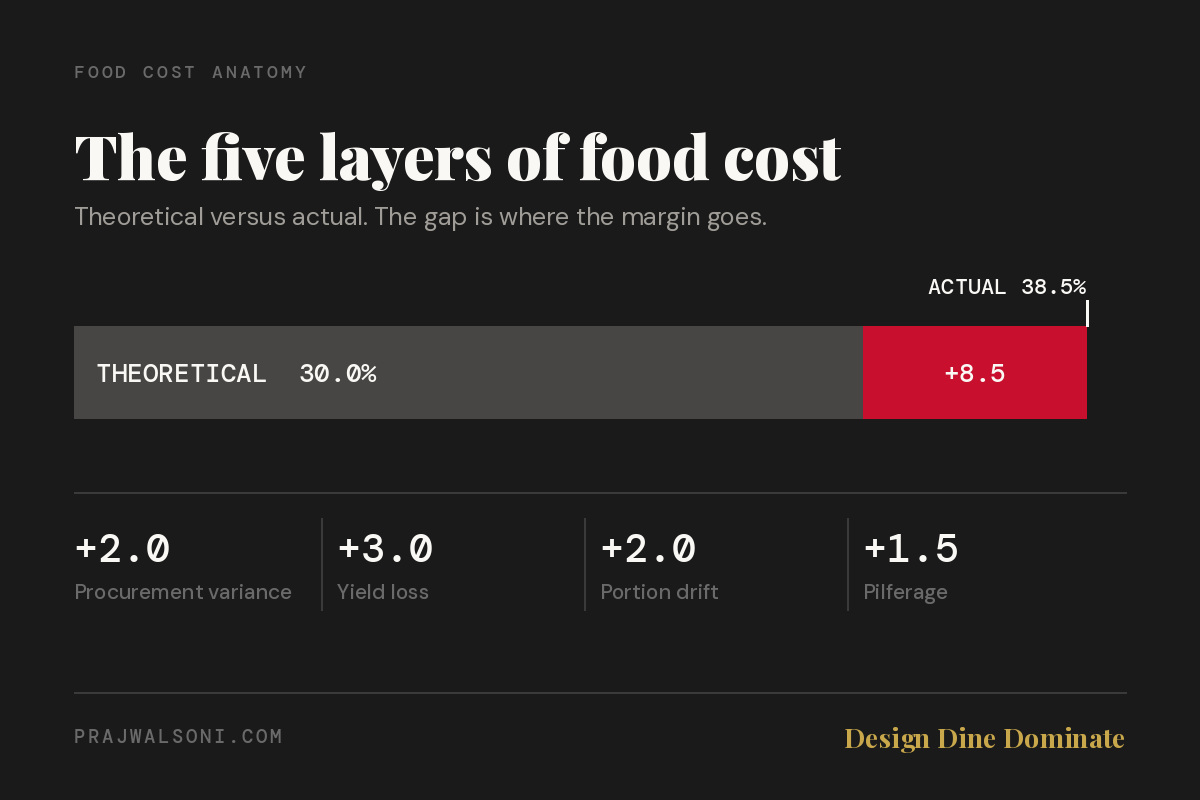
This is the one most operators skip because it requires discipline. You need opening stock, purchases received, closing stock, and staff meals recorded. The formula is simple. Opening stock plus purchases minus closing stock equals actual food consumed. Divide by net revenue. That is your real food cost percentage for the day.
Most restaurants only calculate food cost monthly. By then, four weeks of waste and theft have compounded into a massive number you cannot trace back to any single day. Daily food cost tracking sounds painful but takes 15 minutes if your receiving and closing counts are disciplined. Food cost should sit between 28-35% for most Indian restaurant formats. Anything above 35% daily needs immediate investigation.
5. Wastage and Comp Value
Every plate of dal makhani that went back to the kitchen, every container of prepped paneer tikka marinade that expired, every complimentary dessert you sent to a complaining customer. This needs a rupee value every day. Not an estimate. A count. Restaurants I consult for typically find Rs 1,500-4,000 per day in untracked wastage and comps. That is Rs 45,000-1.2 lakh per month going nowhere.
6. Payment Reconciliation Status
Cash collected versus POS cash total. UPI collected versus POS UPI total. Card settlements pending. Aggregator payments due versus expected. This reconciliation catches theft, POS errors, and aggregator short-payments on the same day they happen. Not three weeks later when your accountant flags a mismatch. Cash flow problems almost always start with sloppy daily reconciliation.
7. Labor Cost as a Percentage of the Day’s Revenue
Take your total wages for the day (monthly salaries divided by working days, plus any overtime or casual labor paid) and divide by net retained revenue. On slow days this percentage will spike. On busy days it will drop. Track it daily and you will see patterns. Maybe Tuesdays consistently show labor cost at 32% while Saturdays sit at 18%. That tells you exactly where your staffing schedule needs adjustment.
How to Build This Report Without Expensive Software
You do not need a Rs 10,000/month analytics platform for this. A Google Sheet with seven columns and ten minutes of daily discipline does the job. Most Indian POS platforms like Petpooja or Posist already generate raw sales data by channel. Your job is to pull that data into a format that shows the numbers listed above.
Here is the daily routine that works. Your closing manager fills in the sheet every night before leaving. Gross revenue by channel. Deductions by channel. Net retained revenue. Food consumed (opening stock plus purchases minus closing stock from physical count). Wastage and comps logged. Payment mode reconciliation done. Labor hours logged. The whole thing takes 15-20 minutes once your team gets used to it.
The first week will be messy. Your team will resist the extra work. Closing stock counts will be approximate. That is fine. By week three, the counts get faster and more accurate. By month two, you will catch problems the same day they happen instead of discovering them in your monthly P&L. If your profit margins sit below 10%, this single habit will likely be the thing that moves the needle.
What a Proper Daily Sales Report Reveals That Monthly P&L Cannot
A monthly P&L tells you what happened. A proper daily sales report tells you what is happening right now, while you can still fix it. The difference between these two is the difference between a 5% net margin and a 15% net margin.
Daily tracking exposes patterns your monthly numbers blur out. You notice that every Monday your food cost jumps to 40% because weekend prep overproduction goes to waste. You notice that your Zomato AOV dropped Rs 60 after you removed a combo from the menu. You notice that Thursday night cash reconciliation is always short by Rs 800-1,200 and it always happens on the same staff member’s shift.
These are not things your CA will find during quarterly review. These are things that cost you Rs 30,000-80,000 per month in silent margin erosion. And they only show up when you track daily with the right numbers. Operators in Pune and Bengaluru I work with who switched to proper daily tracking report catching at least one significant leak within the first two weeks. Not because the leak was new. Because they were finally looking at the right data.
The GST Line Most Daily Reports Get Wrong
Your daily report should track GST collected and GST payable as separate figures. Most operators lump GST into gross revenue and forget about it until filing time. Then their CA tells them they owe Rs 1.8 lakh and they scramble to find the cash. GST compliance for restaurants is not complicated, but it punishes operators who do not set aside the money daily.
Simple rule. Every day, calculate 5% of your dine-in and direct delivery revenue (assuming you are on the 5% without ITC scheme). Put that amount mentally in a separate bucket. Do not treat it as revenue. It is the government’s money sitting temporarily in your account. Restaurants that track this daily never face the GST payment crunch that operators who ignore it until the 20th of every month deal with.
The Weekly Review That Turns Daily Data Into Decisions
Daily data is useless if nobody reviews it with a decision-making lens. Every Sunday morning, take 30 minutes. Pull up the week’s seven daily reports. Look at these four things.
First, which day had the highest food cost percentage and why. Was it a receiving day where purchases spiked? Was it a slow revenue day that made the percentage look worse? Or was it genuine waste? Second, what was the average channel split for the week. Is your aggregator dependence growing or shrinking? If aggregator revenue share grew, your dine-in profitability strategy needs attention.
Third, were there any payment reconciliation gaps. Even Rs 500 daily means Rs 15,000 monthly. That is a staff member’s partial salary leaking out. Fourth, how did labor cost percentage trend across the week. If slow days show labor above 28%, you are overstaffed on those days. Adjust the roster.
This weekly review takes less time than one trip to the wholesale vegetable market. But it gives you more financial clarity than most restaurant owners get from their monthly chartered accountant meeting.
Start This Week. Not Next Month.
You do not need to build the perfect daily report template before you start. Open a Google Sheet tonight. Create seven columns with the numbers listed in this article. Fill it in at closing. Do it for seven days straight. On day eight, review the week.
I guarantee you will find at least one number that shocks you. Maybe your Wednesday food cost is wildly higher than Friday. Maybe your aggregator deductions are eating 28% of delivery revenue instead of the 18% you assumed. Maybe your staff meal cost is Rs 1,800 per day when you budgeted Rs 600. You will not know until you track it. And you cannot fix what you do not track.
If you are running a restaurant in India and your daily sales report only shows one number, total revenue, you are managing your business with a blindfold on. Take it off. The restaurants that survive the next two years will be the ones that know their real numbers every single day, not just on the 30th when the CA sends a summary. For a deeper look at how most restaurants fail from financial blind spots, the pattern is almost always the same: they tracked revenue but never tracked where revenue went.
Stop guessing. Start building. Get Design Dine Dominate, the complete restaurant business playbook from someone who has actually done it.

Leave a comment