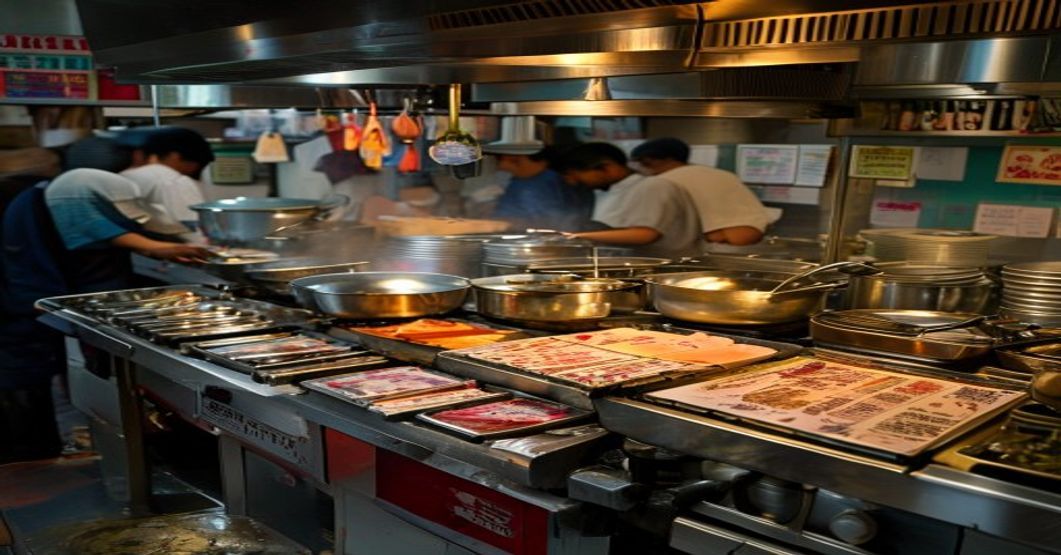
A Single Missing KOT Slip Costs More Than You Think
Last month, a restaurant owner in Surat showed me his Swiggy complaint dashboard. 47 refund requests in 30 days. Missing items, wrong items, delayed items. Total damage: Rs 1.84 lakh in refunds, penalties, and lost repeat customers. When we traced every single complaint back to the source, the answer was the same every time. His kitchen order ticket system was broken.
Not broken as in the printer stopped working. Broken as in the process had no structure. KOTs were getting lost between the billing counter and the kitchen. Duplicate tickets were being fired for the same table. Aggregator orders were handwritten on scraps of paper because nobody bothered to integrate the POS with the kitchen display. And every one of these small failures was bleeding money.
I have operated 23 cloud kitchen brands. In every single one, the kitchen order ticket system was the first thing I fixed. Before menu engineering. Before marketing. Before hiring. Because if orders do not flow correctly from the point of sale to the pass, nothing else matters. Your food cost calculations are fiction. Your prep estimates are guesses. Your customer reviews are a coin toss.
This article is a complete breakdown of how to fix your KOT flow, whether you run a 20-cover dhaba-style restaurant or a multi-brand cloud kitchen doing 300 orders a day.
What Is a Kitchen Order Ticket System and Why Does It Matter?
A kitchen order ticket system is the process and technology that moves a customer’s order from the point of sale into the kitchen, assigns it to the right station, and tracks it until the dish leaves the pass. It is the central nervous system of your restaurant’s operations. When it works, food comes out fast, accurate, and consistent. When it does not, you get chaos that looks like a busy kitchen but is actually a money-burning machine.
The KOT can be a printed slip from a thermal printer connected to your POS. It can be a digital screen mounted in the kitchen. In some restaurants I have consulted with in Ahmedabad and Nagpur, it is still a waiter shouting the order across the room. All three technically “work.” Only one scales without errors.
The reason this matters financially is straightforward. Every wrong order costs you the food cost of the original dish, the food cost of the replacement, the labour time to make both, and often a discount or refund to keep the customer. On a Rs 350 biryani order, a single error can cost you Rs 500 or more when you add it all up. Multiply that by 5 errors a day, and you are looking at Rs 75,000 a month in preventable losses.
How KOT Errors Silently Destroy Your Food Cost
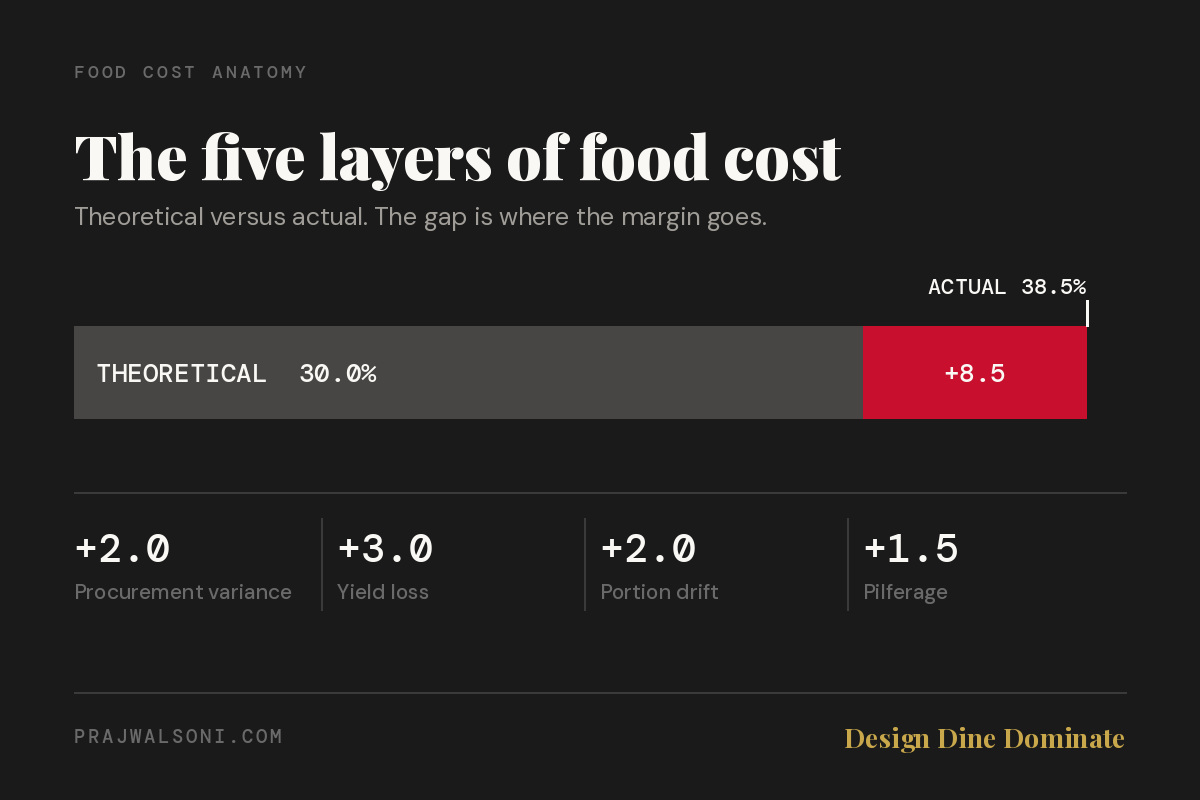
KOT errors inflate your actual food cost by 3-7 percentage points above what your recipe costing spreadsheet says. That gap between theoretical food cost and actual food cost is where most restaurants lose their margins without realizing it.
Here is how it happens. A KOT comes into the kitchen with “1x Dal Makhani, 1x Butter Naan, 1x Paneer Tikka.” The cook reads it, starts the paneer tikka on the tandoor. Meanwhile, the same order gets printed again because the waiter pressed the button twice. Now you have two paneer tikkas on the grill. The extra one gets eaten by staff, tossed, or served to the wrong table. Your POS shows you sold one paneer tikka. Your kitchen used ingredients for two.
I worked with a restaurant in Pune doing roughly Rs 12 lakh a month in revenue. Their theoretical food cost was 32%. Their actual food cost, when we did a full inventory audit, was 39%. That 7% gap translated to Rs 84,000 a month. We traced 60% of it to KOT-related waste. Duplicate tickets, modification errors, and orders that were prepared but never picked up from the pass.
If your food cost is higher than what your recipe costing says it should be, do not start by blaming your vendor or your cook. Start by auditing your KOT process.
Printed KOT vs Kitchen Display System: Which One Works in India?
A printed KOT works for restaurants doing under 100 orders a day with a single kitchen line. A kitchen display system (KDS) works better for any operation above that volume, especially cloud kitchens handling Swiggy and Zomato orders alongside dine-in. The right choice depends on your order volume, station count, and budget.
Printed KOTs have advantages. They are cheap. A thermal printer costs Rs 3,000-8,000. Paper rolls are Rs 15-25 each. Your staff already knows how to read a slip of paper. And when the internet goes down, a locally connected printer still works.
But printed KOTs have serious problems at scale. Slips fall off the rail. They get grease-stained and unreadable. They pile up during rush hour. There is no automatic prioritization. A dine-in order from 20 minutes ago sits behind a Zomato order that just came in. Nobody tracks preparation time. And when a modification comes in, you need to print a new slip and hope the cook sees it before plating the original.
A KDS, integrated with your POS, solves most of these problems. Platforms like Petpooja and Posist offer KDS modules starting at Rs 1,500-3,000 per month. The screen shows orders color-coded by time. Overdue orders flash red. Modifications update in real time. And you get data. Average ticket completion time, station-level bottlenecks, peak hour patterns.
If you are running a multi-brand cloud kitchen or a restaurant doing 150+ covers a day, a KDS pays for itself in the first month. I have written about choosing the right POS system in detail. The KDS is just an extension of that decision.
How to Set Up Your Kitchen Order Ticket System for Zero Errors
A zero-error KOT system requires three things: a single source of truth for every order, station-level routing, and a confirmation loop before food leaves the pass. Miss any one of these and errors creep back in within a week.
Single Source of Truth
Every order, whether it comes from a waiter’s tablet, the billing counter, Swiggy, Zomato, or a direct phone call, must enter the same system before reaching the kitchen. No handwritten chits. No verbal orders. No sticky notes on the fridge. One POS. One kitchen printer or display. One flow.
The most common mistake I see in restaurants across Gujarat is this: dine-in orders go through the POS, but aggregator orders get called out verbally by whoever is watching the tablet. That creates two parallel systems. And two parallel systems will always conflict during peak hours. Use a platform like UrbanPiper or your POS’s built-in aggregator integration to push all orders into one queue. This single change reduced order errors by 40% in a cloud kitchen I set up in Bengaluru.
Station-Level Routing
Your kitchen is not one unit. It is multiple stations. Tandoor. Gravy. Chinese. Desserts. Beverages. A single KOT with 8 items across 4 stations creates confusion because no station owns the full ticket.
Configure your POS to split KOTs by station automatically. When a customer orders paneer tikka, dal makhani, and a gulab jamun, three separate station tickets should print. The tandoor station gets the tikka. The gravy section gets the dal. The dessert station gets the gulab jamun. Each station works on its portion. The expeditor at the pass collects everything before sending it out.
I have seen restaurants try to do this manually by color-coding paper KOTs. It works for a week. Then someone runs out of pink paper and the whole system collapses. Automate this through your POS. Petpooja and GoFrugal both support station-level KOT routing. It takes about 2 hours to configure.
The Confirmation Loop
Before any order leaves the kitchen, someone must physically verify it against the KOT. This is the expeditor’s job. In a small restaurant, this is the owner or the head cook. In a bigger operation, this is a dedicated role.
The expeditor checks three things. Is every item on the ticket present? Does the quantity match? Are modifications applied correctly? If a ticket says “Paneer Tikka, no onion,” and the dish has onion, it goes back. No exceptions. No “the customer probably won’t notice.”
This 30-second check at the pass prevents 5-minute problems at the table and 5-day problems on your Zomato ratings. I wrote about managing online reviews in a separate piece, but the work starts right here at the pass.
Fixing KOT Flow for Swiggy and Zomato Orders
Aggregator orders need a faster, tighter KOT process than dine-in because the penalties for delays and errors are immediate and financial. A dine-in customer might wait patiently. Swiggy’s system will not. Late preparation triggers delivery partner reassignment, which triggers longer delivery times, which triggers bad ratings, which triggers lower search ranking.
The fix is simple but most restaurants do not do it. Treat aggregator orders as priority tickets during peak hours. Your KDS or printed KOT system should flag delivery orders with a different color or prefix. Set an internal target of food ready in 8-12 minutes from order acceptance. Assign one cook or one burner specifically to aggregator orders during the 12-1 PM and 7-9 PM rush windows.
A cloud kitchen brand I ran in Hyderabad was averaging 28-minute preparation times on Swiggy. After restructuring the KOT flow with dedicated station routing and a 12-minute prep target, we brought it down to 14 minutes. Our Swiggy ranking improved within 3 weeks. Order volume went up 22% the following month with zero additional ad spend.
Your aggregator commission already sits between 15-30% depending on your plan and city. Do not hand them more money through avoidable refunds caused by sloppy KOT management. If your aggregator operations need a broader overhaul, I covered that in the cloud kitchen operations guide.
The KOT Audit: Do This Every Monday Morning
A weekly KOT audit takes 30 minutes and will show you exactly where your kitchen is leaking money. Do it every Monday before the week’s chaos begins. Here is the exact process I follow with every restaurant I consult for.
Pull last week’s data from your POS. Look at three numbers. First, total KOTs generated versus total bills generated. If KOTs outnumber bills by more than 10%, you have a duplicate ticket problem. Second, count the number of cancelled or voided KOTs. Each void is a potential waste event. More than 5% voids means your order-taking process is broken. Third, check your modification count. If modifications exceed 8-10% of total items, your menu descriptions are confusing customers or your staff is entering orders incorrectly.
Now walk into the kitchen. Check the KOT rail or the discard bin. Are there tickets from the previous night still hanging? Are there illegible slips? Is the printer alignment off, cutting ticket text in half? These physical checks catch problems that data misses.
Document your findings. Share them with your kitchen team in a 10-minute standup. Assign one fix per week. Not five. One. Fix the biggest leak first. Next Monday, check if it worked. This kind of operational discipline is what separates restaurants that survive from restaurants that scale.
Common Kitchen Order Ticket System Mistakes I See Every Week
After consulting with restaurants across Ahmedabad, Surat, Pune, and Bengaluru, I see the same KOT mistakes repeated everywhere. Fixing even two of these will show results within a week.
Mistake 1: No ticket number sequencing. If your KOTs do not have sequential numbers, you cannot track missing tickets. A gap in the sequence means a lost order. Your POS should auto-number every KOT. If it does not, switch platforms. This is basic.
Mistake 2: Waiters memorizing orders. A waiter who takes 4 orders in his head and enters them at the POS counter 6 minutes later will make errors on at least one. Give your staff handheld devices or captain order pads that sync with the POS. The investment is Rs 8,000-15,000 per device. The error reduction pays for it in two weeks.
Mistake 3: No KOT for complimentary items. When you send a free masala chai to a VIP table without a KOT, that chai does not exist in your inventory system. Do this 10 times a day and you have ghost consumption eating into your margins. Every item that leaves the kitchen, paid or free, needs a ticket. Your inventory management depends on it.
Mistake 4: Ignoring the printer. Thermal printers in hot, greasy kitchens die fast. Keep a backup printer. Always. A dead printer during Friday dinner service is not an inconvenience. It is a crisis that can cost you Rs 15,000-20,000 in a single evening of errors and delays.
What a Clean KOT System Does to Your Bottom Line
A properly built kitchen order ticket system can improve your net margin by 3-5 percentage points. For a restaurant doing Rs 15 lakh a month, that is Rs 45,000-75,000 going from waste to profit. Every single month.
It also fixes things that are harder to measure but equally important. Kitchen stress drops because cooks are not guessing what to make. Service speed improves because orders flow in sequence. Staff arguments reduce because there is a paper trail for every decision. Your Swiggy and Zomato ratings climb because accuracy goes up and complaints go down.
I have seen restaurants invest Rs 5 lakh in interior redesign hoping to boost revenue. The same owners refuse to spend Rs 2,000 a month on a KDS module or 30 minutes a week on a KOT audit. The interior might bring in new customers. The KOT system is what keeps the money those customers spend.
Your profit margins are built in the kitchen, not the dining room. And the kitchen runs on the KOT.
Start This Week: Your 3-Day KOT Fix Plan
Day 1: Audit your current KOT process. Count how many orders come in through channels that bypass your POS. Check your void and cancellation rate from last month. Identify if you have duplicate ticket issues.
Day 2: Fix the single biggest leak you found. If aggregator orders bypass the POS, integrate them today using UrbanPiper or your POS platform’s aggregator module. If duplicate tickets are the problem, check your printer connection and your staff’s order entry habits. One fix. Done properly.
Day 3: Brief your kitchen team. Show them the numbers. Tell them what changed. Set the rule: nothing gets cooked without a ticket. Nothing leaves the pass without an expeditor check. Put a written SOP on the wall next to the KOT rail.
Then run the Monday audit next week. Compare the numbers. You will see the difference.
Stop guessing. Start building. Get Design Dine Dominate, the complete restaurant business playbook from someone who has actually done it.

Leave a comment