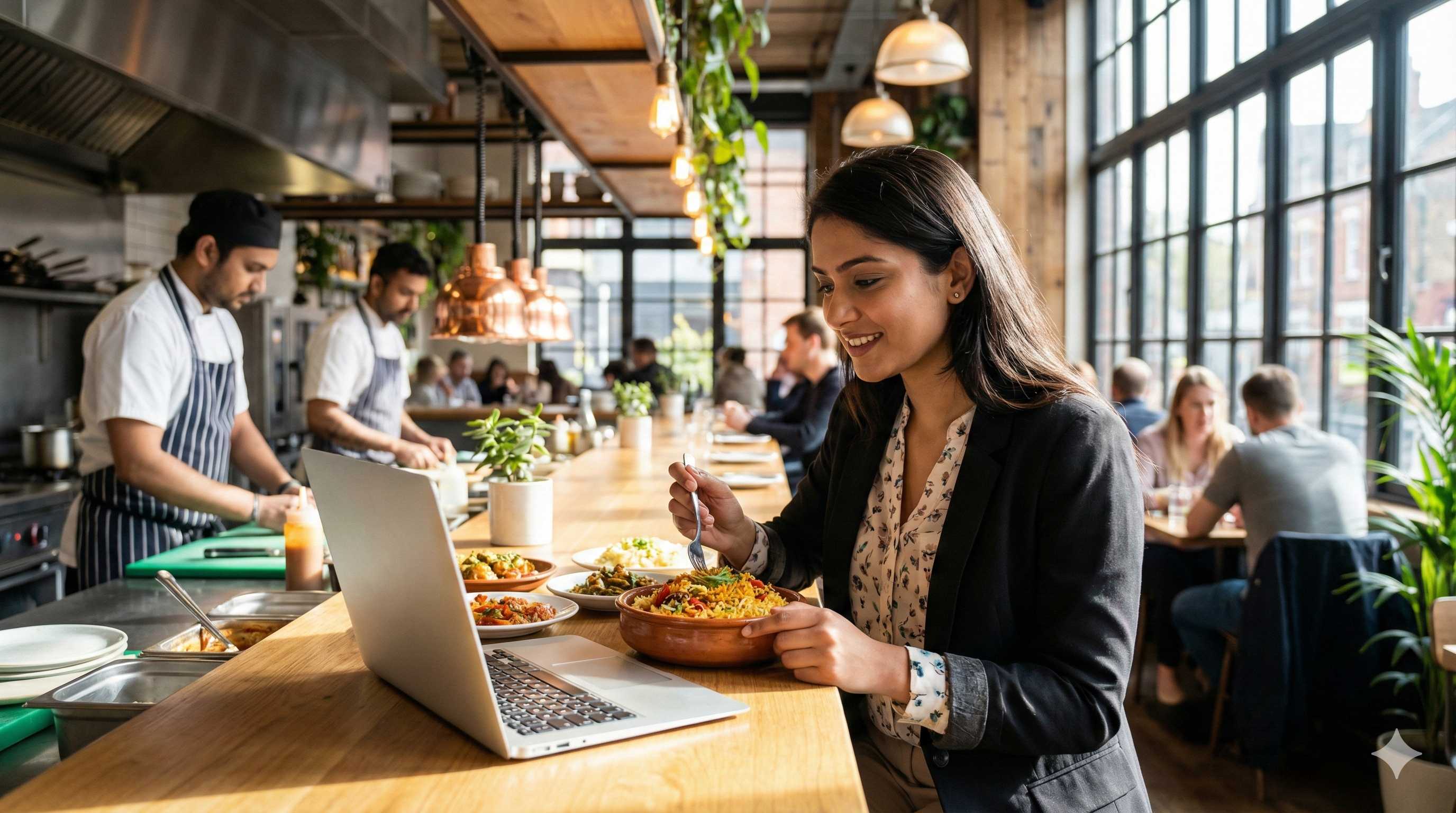
I still remember the Bangalore restaurant owner who seated solo diners in the back corner. “They only order one dish,” he said. “They’re killing my turnover.”
Three months later, those same solo diners were his most profitable segment. They came back every single week.
Solo dining restaurants India are experiencing explosive growth. Single-person dining is growing 35% annually in metro cities. The demographics are clear: this is one of the fastest-growing restaurant segments, and most operators are unprepared.
Why Solo Dining is Exploding in India
Walk into any Mumbai or Bangalore cafe at 2 PM. Count the solo diners. Ten years ago, you’d see one or two. Today? It’s 30-40% of lunch traffic.
The 2021 Census shows single-person households jumped from 5% to 9.3% of urban India. That’s 75 million people living alone. These aren’t just students or divorced individuals. It’s young professionals earning good money, women building careers, people who chose independence.
Here’s what surprised me: solo diners visit 3-4 times monthly. Groups? Once a month, maybe twice. The lifetime value math isn’t close.
Marriage patterns tell the story. According to the latest National Family Health Survey, urban men now marry at 28-29 years (up from 24-25). Women marry at 26-27 (up from 21-22). That’s 5-7 extra years of independent dining.
When I ran restaurants in Germany, 30-35% of customers ate alone. Staff treated it like ordering coffee. Completely normal. India’s getting there, but we’re 5-7 years behind. Restaurants that act now will own the category.
What Solo Diners Actually Want
I’ve eaten alone in over 200 Indian restaurants. The most common mistake? The greeting. “Just one?” with surprise. Or worse: “Waiting for someone?”
Solo dining restaurants India need to understand five critical needs:
Smart seating. Four-top tables make solo diners feel awkward. Counter seating with kitchen views works. Two-person tables feel right. In Germany, every restaurant had bar seating for solo regulars. A Pune cafe converted six four-seaters into twelve two-seaters. Solo traffic jumped 120% in two months.
Menu flexibility. Indian restaurants love sharing dishes. Terrible for solo diners. You order too much or skip dishes. Offer half-portions at 60% price. A Bangalore biryani place created “Solo Feast” combos at ₹280. It became 40% of lunch orders within a month.
Proper service training. Train staff with one rule: treat solo diners like groups of two. Same service frequency, same attention. Don’t hover, don’t rush. A Delhi restaurant trained servers this way. Solo diner satisfaction jumped from 6.2 to 8.7 in two weeks.
Engagement options. German restaurants had newspapers and magazines at tables. One Kolkata cafe added food journals at counter seats. Dwell time increased 15 minutes. Great for beverage upsells.
Zero judgment. Never say “just one” or “waiting for someone.” Say “table for one? This way.” Normalize it.
Which Restaurant Formats Win
Coffee shops and cafes understand solo dining. But most offer terrible food. There’s a gap between “good coffee, sad sandwich” and “proper meal, group-focused restaurant.” Fill that gap and win.
Counter-service restaurants naturally work. Ramen bars, dosa counters, sushi spots. Watching food prep is entertainment. The counter removes the awkward empty table feeling.
QSR and fast-casual already winning. McDonald’s, Burger King, Subway. Zero judgment, consistent experience. Premium fast-casual should lean in harder.
Casual dining needs the most work. Currently group-focused. But lunch is wide open. Menu adaptation and seating redesign can capture solo lunch crowds without alienating evening groups.
Family restaurants and buffets struggle. The value proposition breaks for solo diners. Chasing them dilutes your core business.
The Economics Make Sense
Restaurant owners worry solo diners waste tables. Here’s the real math:
Solo diners visit 3-4 times monthly. Groups visit once or twice. Monthly revenue per solo diner: ₹1,200-1,600. Monthly revenue per group of four: ₹1,400-2,800 (spread across four people).
Solo diners are easier to serve. Faster service, simpler orders, less kitchen complexity. They fill slow periods. Flexible timing. Happy to come at 3 PM when groups are in offices.
The catch? You need the right seating mix. Seating solo diners at four-tops loses money. Counter seating, two-tops, and proper table management makes the economics work beautifully.
How to Market to Solo Diners
Don’t say “for lonely people.” Don’t make it pity. Solo dining is choice, not circumstance.
Messaging that works: “Your table. Your time. Your choice.” “Work-friendly spaces.” “Perfect for lunch breaks.” Show solo diners in Instagram posts looking happy and engaged. Feature solo regulars in stories.
A Bangalore restaurant partnered with solo travel bloggers. They created “work from restaurant” content. Laptop, coffee, good food. The restaurant became known as solo-friendly without explicit marketing. Organic traffic increased 40% in three months.
The German insight: normalize it visually. When people see others eating alone and looking content, stigma dies fast.
What’s Coming by 2030
By 2030, solo dining will represent 20-25% of urban restaurant traffic in India. The National Restaurant Association projects organized food services reaching ₹5.5-6 lakh crores by 2030. That puts solo dining at ₹1.1-1.5 lakh crores annual revenue.
That’s not a niche. That’s a core market segment.
Restaurants building solo-friendly reputations now will dominate. Solo diners are tribal. They share recommendations, build communities, create compounding word-of-mouth. Early movers build moats.
The restaurants that lose? Those still treating solo diners as inconvenient anomalies in 2026-2027. By then, catching up means expensive redesigns and rebranding.
Solo dining isn’t coming. It’s here. The question is whether you’re ready.


Leave a comment