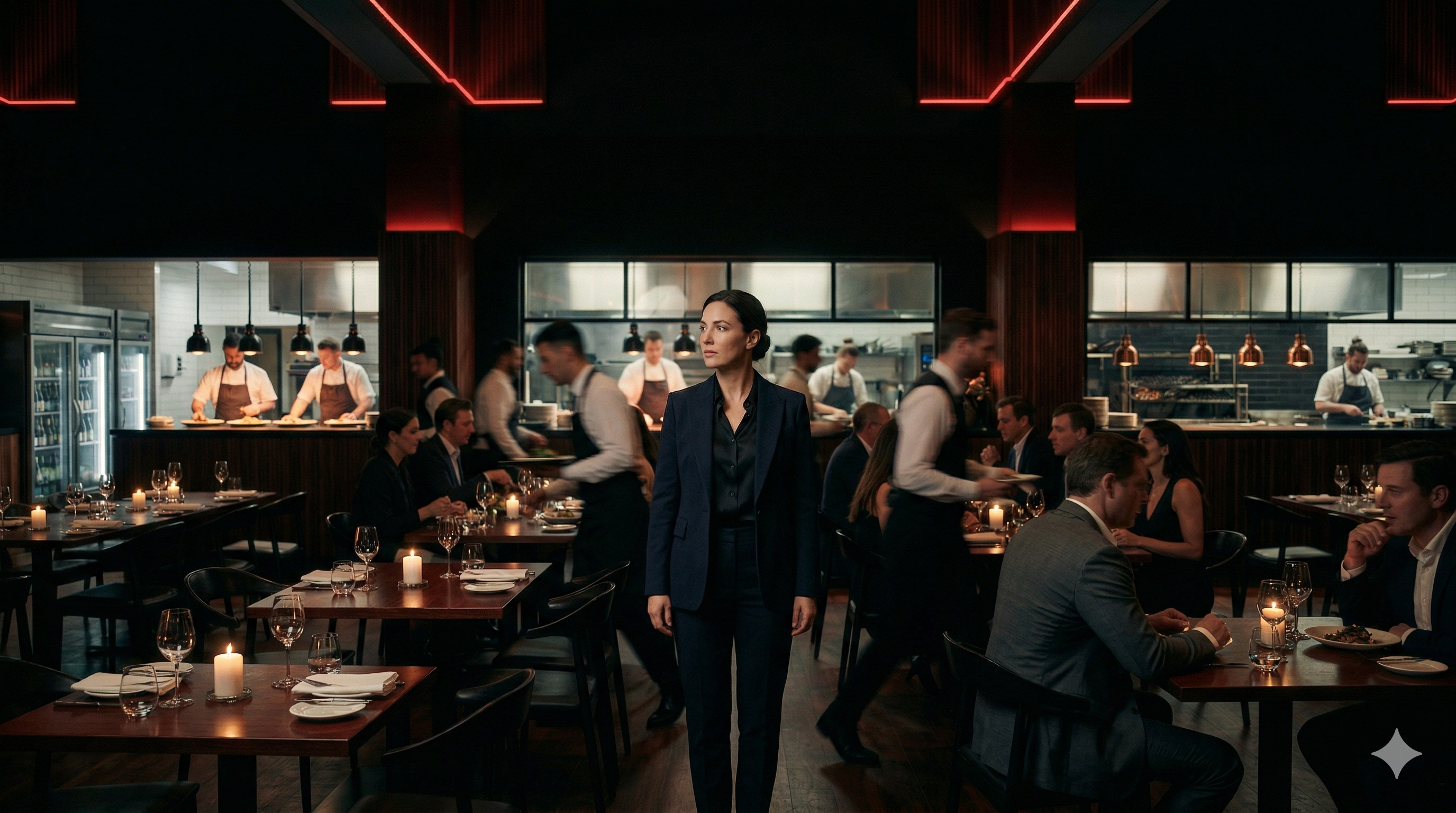
Here is the truth: India’s restaurant market will hit $100 billion by 2030, and you are watching competitors scale while you are still figuring out unit economics. The window is open. It will not stay open. Most owners who try to scale in 2026 will stumble because they think growth is about opening more locations. It is not. It is about scaling with discipline, and that is a skill almost nobody has.
You have seen it happen. A restaurant does well in one location. The owner gets confident. They open a second unit. Then a third. By unit four, food quality drops. Staff turnover spikes. Margins vanish. The brand collapses. Not because the concept was bad. Because the operator did not understand the difference between running a restaurant and running a restaurant system.
The Market Moment: Scale or Stagnate
India’s food services sector is entering what industry analysts are calling a “stage of scaling with discipline.” Between 1,000 and 2,000 restaurants are expected to scale aggressively over the next 18 months. This is not hype. This is survival mathematics.
Here are the hard numbers. The National Restaurant Association of India projects the QSR segment alone will grow at 12-15% annually through 2026. Multi-brand cloud kitchens that managed unit profitability saw expansion rates jump 40% year-over-year. Meanwhile, single-unit operators, those who did not systematize, saw their market share compress by 7-9% in major metro markets.
Globally, the story is the same with different pressure points. Restaurant employment will reach 15.8 million jobs in 2026, meaning labor costs will not get cheaper. Consumers are tightening spending, cutting dining frequency by an average of 1.3 visits per month. The operators who win are those who can scale profitably without chasing volume. The operators who lose are those who scale blindly.
The Hard Truth Most Owners Will Not Admit
You cannot scale what you do not systematize. This kills more growth plans than capital constraints, location shortages, or talent gaps combined.
Most restaurant owners are craftspeople, not operators. You know how to make great food. You know how to create hospitality moments. You do not know how to document processes, train to standard, measure consistency across locations, or manage P&L without being in the kitchen. That is not an insult. That is just the gap between running one restaurant well and running a network of restaurants profitably.
The restaurants that scaled successfully in 2025, brands like Mainland China, Social, Pind Balluchi’s, did not do it by replicating their founder’s personal touch across 15 locations. They did it by replacing personal touch with operational systems. Recipes became SOPs. Customer service became training modules. Quality became measurable KPIs. The owner stopped being the product. The system became the product.
You have watched competitors open locations and watched them burn. The reason? They treated unit 2 like a copy of unit 1, not like the first location in a replicable system. That is operational blindness, and it kills brands in the scaling phase.
Why 2026 is Different: The Discipline Requirement
Previous scaling cycles rewarded aggression. Open fast, grab market share, optimize later. That playbook is dead. Here is why.
Unit economics are transparent now. Every landlord, investor, and bank wants to see 3-year data on similar units before they back expansion. You cannot hide poor margins in location 1 when planning location 2. You cannot blame external factors. The data either shows a replicable unit or it does not.
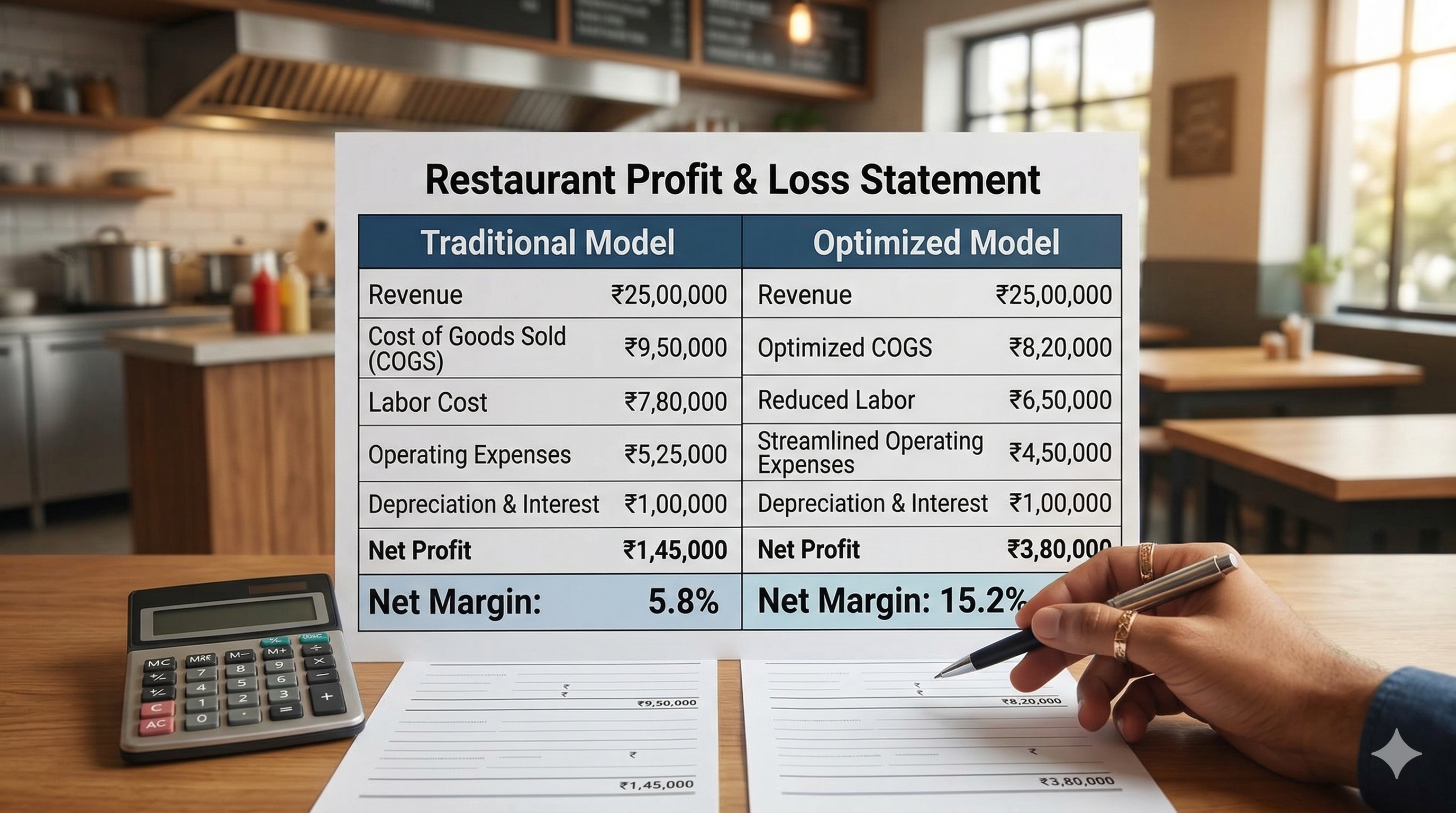
Labor costs have moved against operators permanently. In 2020, you could hire kitchen staff at 15,000 rupees per month. In 2026, that same role is 24,000-28,000 rupees with higher attrition. You cannot scale payroll proportionally while keeping food costs flat. You need operational efficiency, not just volume. That means process discipline from day one.
Consumer expectations are region-specific and fragmented. A Pune audience will not eat the exact same menu as a Bangalore audience. A Mumbai diner expects different pricing than Nashik. The old model, same menu, same pricing, same service playbook everywhere, fails in 2026. You need systems flexible enough to adapt to local taste while maintaining core identity. That requires discipline in what you will and will not change.
Technology CAGR of 25-35% through 2030 means operational tech is no longer optional. POS systems, inventory management, labor scheduling, delivery integrations, customer data platforms, these are now table stakes. Operators who tried to scale in 2025 without integrated systems lost 8-12% to waste, theft, and inefficiency. That multiplies across 5 or 10 units and destroys profitability.
Operator Insight: How to Scale Without Breaking
I managed 23 brands and 18 individual restaurants across Gujarat. The ones that scaled profitably followed a pattern. The ones that broke the model every time did not. Here is what separated them.
First: Fix your flagship unit to become a replication template. Before you open location 2, your first restaurant should be operating at 85%+ gross margin with documentation so detailed that a new general manager could step in and maintain quality within 30 days. If you cannot achieve that with one location, you will not achieve it with five. Most owners skip this step because they are hungry to scale. That impatience kills the next 3-4 units.
What does “detailed documentation” mean in practice? Your recipes are written down, not in someone’s head. Your service flow is choreographed, not improvised. Your hiring criteria are defined. Your staff training takes 6 weeks, not “however long it takes.” Your kitchen zones have clear input and output metrics. Your inventory turns are tracked by category. Your waste is measured weekly. This is not exciting work. It is the boring work that separates winners from failed expansions.
Second: Choose your second location to validate, not expand. Pick a location that mirrors your first in size, demographic, and rental cost. Make it your test kitchen for operational learning, not your second revenue engine. Run it for 12 months before you move to locations 3 and 4. During that year, you will identify 15-20 operational bottlenecks you could not see with one unit. You will learn which staff roles are critical and which you can eliminate. You will see which menu items do not replicate in terms of cost or speed. You will realize what training actually stuck and what did not.
Most operators push to 4-5 units within 18 months because they see traction. Then they hit year 2 with broken systems and cannot recover. The disciplined approach is slower upfront. It is exponentially faster downstream.
Third: Build your management team before you scale. You cannot open unit 3 with the same GM that managed units 1 and 2. That person is now a manager of managers, not a restaurant operator. You need to hire or promote someone who understands systems implementation and can run by numbers, not intuition. In India specifically, this is hard because restaurant management talent is thin. You will need to train someone from outside F&B or recruit aggressively 6 months before your third opening.
Fourth: Let technology carry the load, not people. If your scale plan requires hiring proportionally more people, your unit economics do not work. Technology is not optional anymore. A cloud-based POS that syncs inventory, labor, and customer data across locations will cost you 40,000-60,000 rupees per month. That investment pays for itself by eliminating waste and shrinkage in 4-5 months when you scale to 3-4 units. Without it, you will overhire, over-order, and over-waste your way into negative margins.
The 2026 Scaling Playbook: Specific Tactical Steps
Here is what you do now if you want to scale with discipline in 2026.
- Audit your current unit against a scaling checklist. Does it run at 85%+ gross margin? Can a new GM step in and maintain quality within 30 days? Are recipes documented? Are hiring criteria written down? Do you track waste weekly? If the answer to any is no, fix it before expanding. This takes 8-12 weeks for most operators.
- Map your second location strategically. Do not chase high-visibility real estate. Choose a location that replicates your first unit’s demographics, rent as a percentage of revenue, and customer profile. This location is your validation, not your expansion.
- Implement tech infrastructure now, not later. Choose a POS system, inventory platform, and labor management tool. Deploy them in your first location for 60 days before opening unit 2. Bugs and workflows need to be refined when you have bandwidth, not during expansion.
- Hire your operations manager before you open unit 2. This person should spend 4 weeks embedded in location 1, learning your systems deeply, before they are responsible for unit 2. They are not a chef or front-of-house expert. They are a systems keeper.
- Run your first two units at full profitability for 12 months before location 3. Do not let expansion urgency override discipline. Investors, banks, and good staff can all see when a brand is fundamentally broken. A brand with 2 solid units is more attractive than 5 struggling units.
- Price strategically for location variance. Do not assume your Delhi menu pricing works in Indore. Test pricing, portion size, and menu mix in location 2. You will find 10-15% variance on what the market will bear. Document this learning before you open location 3 in a different city.
- Build a training curriculum, not ad hoc onboarding. Every new hire should go through a structured 6-week program covering your recipes, service standards, and operational norms. This takes time to build. Build it now while you have only one location. It will save you months when you scale.
The Franchise Question: Build Before You Franchise
India’s franchise market for restaurants is expected to grow significantly in 2026. You will be tempted. Do not franchise a concept you have not first scaled to 4-5 owned units with consistent profitability and documented systems.
Franchising a weak concept multiplies your liability. Every franchisee that fails is a reputational hit you cannot control. Every franchisee that succeeds without your systems will diverge from your brand standards and confuse customers about what you actually are. The operators who franchise successfully are those who have already proven they can scale. McDonald’s did not franchise at unit 2. They franchised after they had perfected the system.
The 2026 Reality: Scale Discipline Beats Growth Speed
The restaurant operators who will dominate 2026 are not the ones growing fastest. They are the ones growing smartest. That means slower, more deliberate expansion with operational discipline at every step.
You have maybe 18 months before capital gets tighter, labor costs rise further, and consumer spending gets more cautious. Use that window not to open as many locations as possible, but to build a system that can scale indefinitely without breaking.
This is not theory. This is what happens when you run real restaurants at scale. The brands that are winning right now in India have one thing in common: they decided early that they would rather be a 10-unit network of profitable restaurants than a 50-unit network of barely-surviving restaurants.
If you want to scale your restaurant in 2026 without losing quality, margin, or your sanity, you need a playbook. That is what I teach in Design Dine Dominate and in my consulting work. I have made every scaling mistake you can make, and I have coached operators through them too. The difference between a brand that breaks and a brand that scales is discipline, not luck.
Your next move: Audit your first location against the scaling checklist above. Identify the top 3 operational gaps. Fix them before 2026. Then you will be ready to scale the right way.


Leave a comment