Two cloud kitchens. Same city. Both sell biryani.
One makes 6% profit. One makes 18%.
Not luck. Not location. Three operational choices.
Here’s what separates them.
The Margin Gap Nobody Talks About
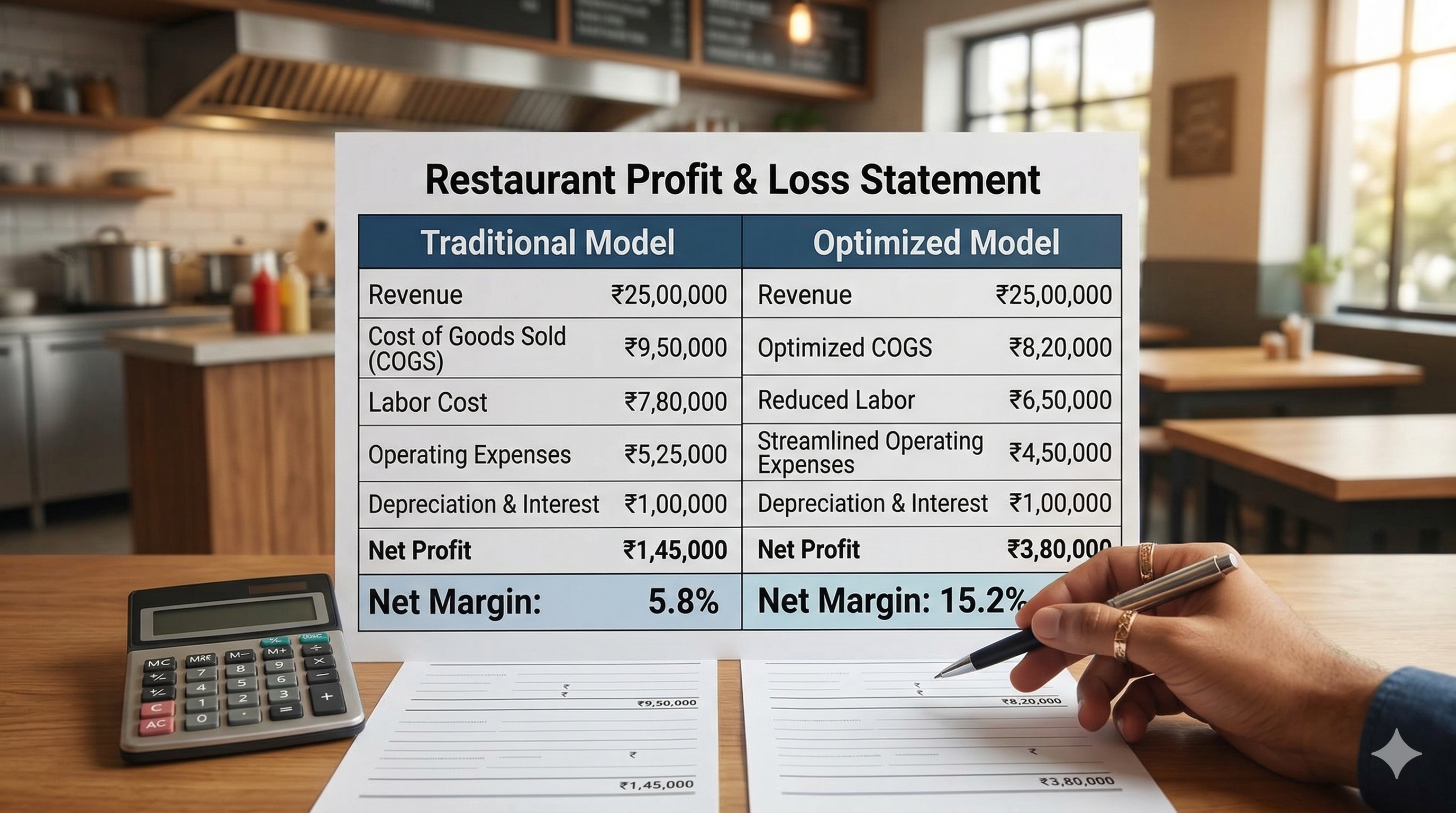
Most Indian restaurant operators think 5-7% net profit is normal. Acceptable. Just how the business works.
It’s not.
Top performers in India are making 15-25% net margins. Same market. Same aggregator fees. Same ingredient costs.
The gap isn’t about working harder. It’s about three specific decisions that compound over time.
I’ve managed restaurants across India and Germany. Watched operators bleed money on things they thought were fixed costs. They weren’t.
Here’s what actually moves your margin from 5% to 15%.
Margin Killer #1: You Chose the Wrong Format
Your format sets your margin ceiling. Period.
Cloud kitchen: 15-25% net margin
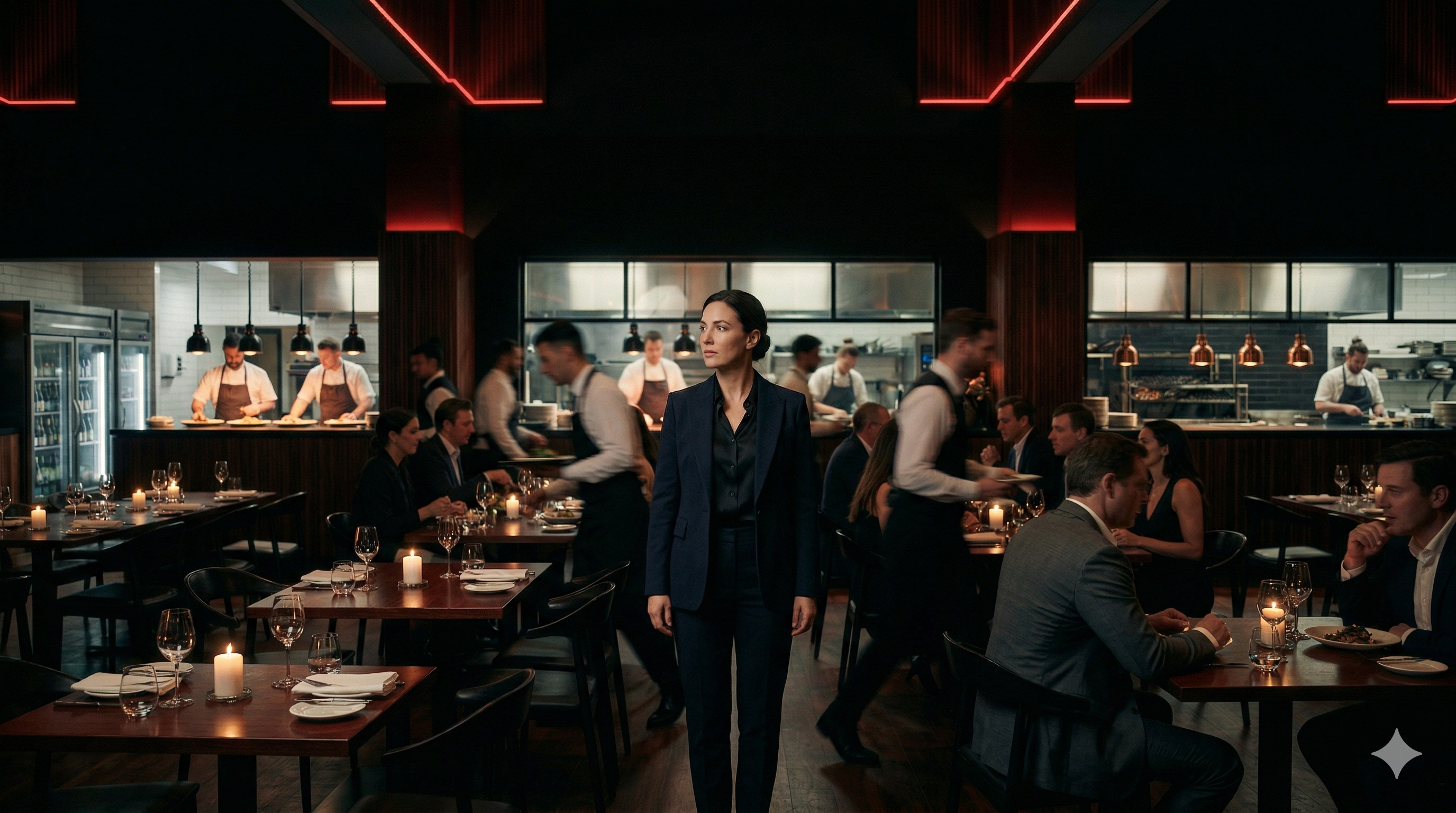
Traditional casual dining: 5-7% net margin
Same food. Different economics.
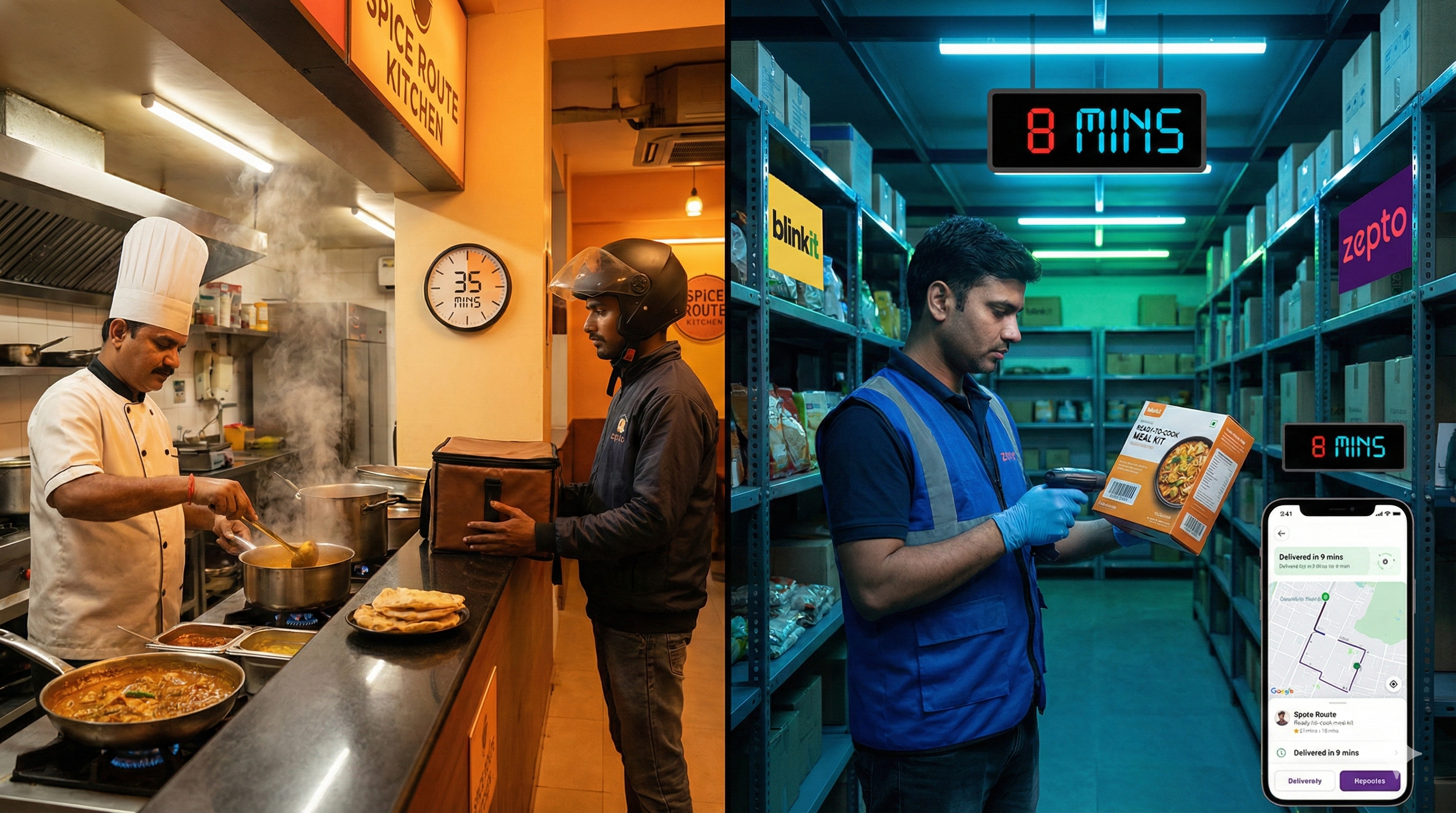
Cloud kitchens cut rent by 70%. No front-of-house staff. No ambiance costs. No walk-in seating you’re not using.
A 600 sq ft cloud kitchen in Koramangala costs ₹45,000/month. A 1,500 sq ft dine-in space costs ₹1.8 lakhs.
That’s ₹1.35 lakhs monthly difference. On a ₹6 lakh monthly revenue cloud kitchen, that’s 22% of revenue saved on rent alone.
Traditional restaurants need 8-12 staff minimum. Cloud kitchens run on 3-5. Labor cost drops from 25% of revenue to 15%.
The math compounds.
But format isn’t everything.
Some traditional restaurants make 12-15% by optimizing what they have. Premium pricing. High table turnover. Alcohol margins.
Some cloud kitchens make 8% because they’re running inefficiently.
Format gives you a starting point. Operations determine where you land.
When to switch formats:
If you’re dine-in doing ₹4-5 lakhs monthly with 80% orders from Swiggy anyway, you’re paying for ambiance nobody uses. Move to cloud kitchen. Cut costs 40%.
If you’re cloud kitchen doing ₹12 lakhs monthly, you’ve maxed out delivery. Consider hybrid model with limited seating. Capture walk-ins without full restaurant overhead.
Don’t switch because cloud kitchens are trendy. Switch because your numbers justify it.
Germany taught me format discipline.
European restaurants optimize their format ruthlessly. 40-seat bistro stays 40 seats. They don’t dream of 80 seats and double rent.
Indian operators often upgrade space before revenue justifies it. “We’re doing well, let’s get a bigger place.” Then margin drops from 12% to 6% because fixed costs doubled.
Revenue growth doesn’t mean margin growth. Sometimes staying small keeps you profitable.
Margin Killer #2: You’re Paying 27% Commission Forever
Swiggy takes 27%. Zomato takes 25%.
Every. Single. Order.
Let’s do the math on a ₹180 biryani:
- Swiggy commission (27%, includes delivery): ₹49
- Food cost: ₹75
- Packaging: ₹10 (customer pays separately, but you bear the cost)
- Left after commission and costs: ₹46
That’s ₹46 gross profit on ₹180 selling price. 26% gross margin.
Now remove rent, labor, utilities. You’re at 5-6% net.
But wait. There’s more bleeding.
Ad spend on Swiggy/Zomato to rank higher. Refunds when customers complain. Discounts the platform forces you to offer.
These aren’t fixed. But they add another 3-5% of revenue on average.
Top operators escape this.
They build direct ordering. WhatsApp. Instagram. Repeat customers.
Start small. 50-100 regular customers ordering via WhatsApp instead of Swiggy. That’s ₹25,000-40,000 monthly revenue at zero commission.
On ₹40,000 direct orders, you save ₹10,800 in commission monthly. Plus zero ad spend. Plus zero platform-forced refunds.
Real savings: ₹12,000-14,000 monthly. Over a year, that’s ₹1.4-1.7 lakhs.
More importantly, you own the customer data. Phone numbers. Order history. Preferences.
Swiggy owns nothing for you. You’re renting their customers every time.
How to start direct ordering:
WhatsApp Business is free. No developer needed.
Create menu message template. “Hi! Here’s today’s menu. Reply with item number to order. Payment via UPI.”
Post on Instagram: “Order direct via WhatsApp, get 15% off. Link in bio.”
Every order that comes through WhatsApp instead of Swiggy increases your margin by 27%.
I wrote about using AI to set up WhatsApp ordering systems. It takes 30 minutes. Zero cost. The margin impact is immediate.
200 WhatsApp orders monthly at ₹200 average = ₹40,000 revenue.
Commission saved = ₹10,800.
Ad spend saved = ₹1,000-2,000.
Platform refunds avoided = ₹500-1,000.
Total monthly savings: ₹12,000-14,000.
That’s the difference between 6% and 9% margin.
The aggregator dependency trap.
95% of Indian restaurant orders flow through aggregators. You can’t escape completely.
But you can move from 95% dependent to 70% dependent. That 25% shift changes everything.
German restaurants I worked with had 40% direct orders. Phone. Website. Regulars. They controlled half their revenue.
Indian operators treat Swiggy like the only option. It’s not. It’s one channel. Build others.
Margin Killer #3: Your Menu Is Killing You
Most operators don’t know which dishes make money.
You think biryani is your winner because it sells most. Maybe. Or maybe it’s your second-highest seller with third-worst margin.
Menu engineering is simple math:
Track every dish:
- Cost to make (ingredients + packaging)
- Selling price
- Units sold per week
- Gross margin percentage
Rank by contribution margin. Not just popularity.
High-selling, low-margin dish = popular waste of kitchen capacity.
Low-selling, high-margin dish = underpriced or under-promoted gem.
High-selling, high-margin dish = your actual money maker.
Real example from the data:
Biryani might cost ₹75, sell for ₹180. Margin: ₹105 (58%).
Chinese fried rice costs ₹65, sells for ₹140. Margin: ₹75 (54%).
Biryani looks better. But if fried rice takes 3 minutes to make and biryani takes 25 minutes, fried rice generates more profit per labor hour.
That’s menu engineering. Time + cost + price + volume.
What to actually do:
Export last 3 months of Petpooja sales data. Spreadsheet. Five columns: Dish, Units Sold, Food Cost, Selling Price, Gross Margin %.
Sort by gross margin percentage.
Bottom 20% of dishes = candidates for removal. Unless they’re strategic loss leaders that drive other sales.
Top 20% by margin = promote more. Instagram. WhatsApp specials. Combo deals.
Middle 60% = optimize. Can you cut food cost 10% by changing supplier? Can you raise price ₹10 without resistance?
I learned this in Germany. Every restaurant I worked tracked contribution margin weekly. Not monthly. Weekly.
They’d kill a dish after two weeks if numbers didn’t work. No sentiment. No “but customers like it.”
If it doesn’t make money, it doesn’t belong on your menu.
Indian operators keep 30-40 items because “choice.”
German restaurants run 12-15 items. Higher margins. Less waste. Faster kitchen.
Every item on your menu costs:
- Inventory space
- Supplier relationship
- Staff training
- Mental bandwidth
- Waste from slow movers
Unless it’s making money, it’s costing money.
Cut ruthlessly. Your margin will thank you.
Your Margin Target (And How to Get There)
Stop accepting 5-7% as normal.
Year 1 target: 8-10%
- Switch to cloud kitchen if dine-in doing <₹6 lakhs monthly with 80%+ delivery
- Build WhatsApp ordering for 20% of revenue (100-200 regular customers)
- Kill bottom 5 menu items by margin
Year 2 target: 10-12%
- Direct ordering at 30% of revenue
- Menu down to 15-20 core items
- Track contribution margin weekly, not monthly
Year 3 target: 12-15%
- 40% direct ordering
- Optimized format (cloud, hybrid, or efficient traditional)
- Menu engineered to 80/20 rule (20% of dishes drive 80% of profit)
Top operators doing 15-25%?
They’re cloud kitchens with multi-brand strategy. Three virtual brands from one kitchen. WhatsApp ordering at 40-50%. Menus under 12 items per brand. Zero dine-in overhead.
You don’t need to go that far. 12-15% net margin gives you cash flow, growth capital, and peace of mind.
5% margin means one bad month wipes you out.
15% margin means you survive bad months and invest in good ones.
The Reality Check
Format, aggregators, menu. Three decisions.
Most operators optimize none of them. They accept 5% because “that’s the industry.”
The industry average is 5-7% because most operators make bad choices. You don’t have to.
Cloud kitchen costs 60% less than traditional. WhatsApp ordering saves 27% commission. Menu engineering cuts waste 15-20%.
Each one independently moves your margin 3-5 points. Combined, they move it 10-12 points.
That’s how you go from 5% to 15%.
Not magic. Math.
I’ve written about restaurant cash flow management before. Margins feed cash flow. Cash flow funds growth. Growth compounds.
But it starts with margin.
If you’re making 5%, you’re one rent increase away from 2%. One aggregator fee hike away from break-even.
15% gives you options. Expansion. Hiring. Marketing. Saving for bad months.
5% gives you stress.
Here’s what to do this month:
- Calculate your actual net margin (not guess—actual P&L numbers)
- If cloud kitchen makes sense, run the math on switching
- Set up WhatsApp Business, get first 20 customers ordering direct
- Export menu data, find your 5 worst performers by margin
One month. Four actions. Your margin moves.
Or don’t. Keep paying Swiggy 27% on a menu you’ve never analyzed from a format you picked because it seemed right.
Your choice.


Leave a comment