71% of Europeans are drinking less alcohol. 1 in 4 people under the age of 35 stopped buying alcohol completely. European foodservice just lost 6% of alcohol revenue in one year.
Indian restaurant owners think this won’t happen here. They’re wrong.
I watched this unfold in Germany. Restaurant owners insisted Germans would never reduce drinking. Beer is culture, they said. Wine is tradition. It’ll bounce back, they promised. It didn’t. By 2024, the bars that ignored the shift were bleeding revenue. The ones that adapted early? They protected margins and captured a new market.
India is exactly where Europe was five years ago. Alcohol sales growing. Confidence high. Warning signs ignored. Therefore, Indian restaurants have a 3-5 year window to prepare before this wave hits. The question isn’t if. It’s whether you’ll be ready.
The Numbers Nobody in India Is Talking About
European restaurant alcohol sales dropped 6% year over year. That’s not a blip. That’s a structural shift. Moreover, retail alcohol fell 1.7% in volume. Wine consumption is down 2.4%. Traditional spirits down 1.3%. Only ready-to-drink cocktails are growing.
Here’s what shocked me most: this isn’t economic. Europeans aren’t broke. They’re choosing not to drink. According to recent industry reports, 71% of Europeans actively reduced alcohol consumption. Furthermore, 49% of Americans are trying to drink less.
The segment getting destroyed? Wine. Down 2.4% globally. In restaurants, wine sales collapsed even harder because younger customers simply don’t order it. Therefore, restaurants heavily dependent on wine revenue are scrambling to redesign beverage programs.
Beer is declining slower but declining nonetheless. European beer production dropped from 367 million hectoliters in 2019 to 345 million in 2024. However, non-alcoholic beer jumped 25% over five years. The money didn’t disappear. It moved.
Meanwhile in India? Alcohol sales grew 7% in the first half of 2025. We’re the fastest-growing major alcohol market globally. Indian operators see these numbers and assume Europe’s problem won’t become ours. However, that’s exactly what European operators thought five years ago.
Why This Is Happening (Three Forces Reshaping Drinking)
The alcohol decline isn’t random. Three major forces are converging. Each one is accelerating.
Gen Z Simply Drinks Less
Gen Z (born 1997-2012) fundamentally changed drinking culture. 19% don’t drink at all. Those who do drink consume 20% less per capita than Millennials. Moreover, 65% reduced drinking in 2025.
Why? Health consciousness dominates. A 2025 Gallup poll found 66% of 18-34 year olds believe moderate drinking harms health. Their parents’ generation viewed moderate drinking as harmless or even beneficial. Gen Z grew up with cancer warnings, mental health awareness, and fitness culture. Therefore, alcohol became optional, not default.
I wrote about Gen Z behavior shifts in restaurants previously. Their rejection of traditional loyalty programs mirrors their rejection of traditional drinking culture. Both stem from the same root: Gen Z optimizes for wellness and social currency, not indulgence and discounts.
Social media amplified this. Nobody wants drunk posts going viral. Sober-curious influencers normalize not drinking. Instagram wellness culture positions sobriety as status symbol. Consequently, Gen Z sees alcohol as outdated, not aspirational.
Furthermore, they have alternatives. Cannabis legalization in many markets provided a substitute. Energy drinks replaced alcohol at social occasions. Gaming and streaming replaced bar culture. The social infrastructure that made alcohol central to young adult life is disappearing.
GLP-1 Drugs Are Suppressing Appetite for Alcohol
This one surprised everyone, including me. GLP-1 drugs (Ozempic, Wegovy, Mounjaro) were designed for weight loss. However, they have an unexpected side effect: they reduce alcohol cravings.
Studies show GLP-1 users reduce alcohol consumption 20-40%. Why? The drugs slow alcohol absorption and reduce the intoxication feeling. Moreover, they suppress appetite generally, including desire for alcohol. A Cornell University study in December 2025 found GLP-1 users cut restaurant spending significantly.
Here’s what matters for restaurants: 16% of US households have a GLP-1 user as of mid-2024. Circana projects GLP-1 users will represent 35% of food and beverage sales by 2030. That’s not a niche. That’s a third of your customer base potentially drinking less.
India’s GLP-1 adoption is slower but accelerating. Affluent urban demographics are adopting first. Therefore, premium restaurants serving high-income customers will feel this impact earliest.
Wellness Culture Replaced Drinking Culture
The broader cultural shift matters most. Drinking used to signal sophistication and social success. Now? Wellness signals status. Clean eating, meditation, fitness, mental health awareness. Alcohol doesn’t fit this narrative.
European restaurants adapted by repositioning. They stopped centering beverage programs around alcohol and started building around functional wellness drinks. German restaurants I worked with introduced adaptogen cocktails, premium kombucha, botanical tonics (ashwagandha lattes, reishi mushroom elixirs, turmeric-ginger tonics). Moreover, they priced these at alcohol levels (€10-15 per drink).
The psychology shifted from “I’m giving up alcohol” to “I’m choosing premium non-alcoholic options.” Therefore, the stigma disappeared. Ordering a €12 botanical tonic feels premium. Ordering water feels cheap. Restaurants capitalized on this.
Where the Money Actually Went
European restaurants didn’t lose beverage revenue. They lost alcohol revenue. The money shifted to new categories.
Functional beverages exploded. The global functional drinks market will hit $250 billion by 2030. Europe’s functional beverage market grew from $32.86 billion in 2025 to a projected $46.89 billion by 2031. That’s 6.12% annual growth while alcohol declined.
What are functional drinks? Beverages with added health benefits. Adaptogens for stress relief. Nootropics for focus. Probiotics for gut health. Electrolytes for hydration. Moreover, these justify premium pricing. A kombucha costs the restaurant ₹40 and sells for ₹180. That’s better margin than most cocktails.
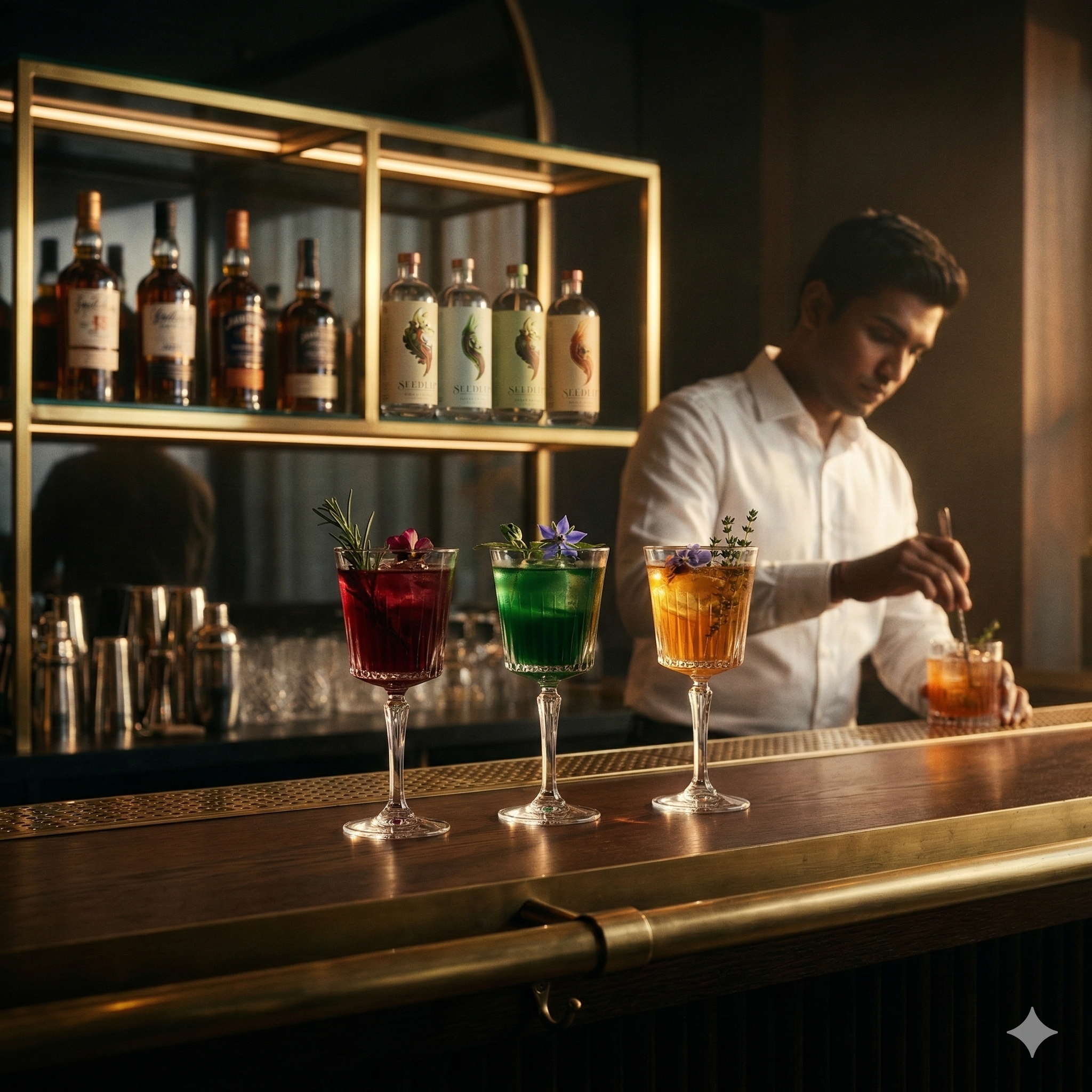
Premium non-alcoholic spirits became huge. Seedlip, Tanqueray 0.0, Gordon’s 0.0. Diageo’s non-alcoholic portfolio grew 40% in FY2025. Furthermore, these products allow restaurants to create elaborate “mocktails” at full cocktail pricing (€10-15). The margin holds because customers perceive value in crafted drinks, not just alcohol content.
German restaurants I consulted for added non-alcoholic spirits to bar programs. Bartenders created signature drinks. Presentation mattered: proper glassware, fresh herbs, table-side preparation. Customers paid happily because the experience justified the price.
The lesson? Premium non-alcoholic isn’t a discount category. It’s a margin-protection strategy.
India: The 3-5 Year Warning Window
India’s alcohol market is booming. +7% growth. Premium segments growing even faster. Women now order 60% of cocktails in metro bars. Everything looks healthy.
However, India consistently tracks European trends with a 3-5 year lag. I’ve seen this pattern repeatedly. The solo dining boom hit Europe first, then India. Gen Z behavioral shifts emerged in the US and Europe, now accelerating in India. Quick commerce disrupted European grocery, then came to India.
Alcohol will follow the same pattern. Here’s why I’m certain:
India’s Gen Z is 250 million strong. They’re already showing early-stage behaviors. Sober-curious gets mentioned in Indian beverage trend reports. Wellness cocktails with adaptogens are appearing in Bangalore and Mumbai. Low-ABV sections show up in chain restaurant menus. These are the same early signals Europe had in 2019-2020.
Moreover, India’s affluent urban demographics mirror European consumption patterns more than traditional Indian patterns. Therefore, metros will shift first. Bangalore, Mumbai, Delhi will show declining alcohol preference among 25-35 year olds by 2027-2028. Tier 2 cities will follow 2-3 years later.
GLP-1 drug adoption in India is minimal now but growing. Affluent customers are starting. Within 3-5 years, penetration will reach meaningful levels in premium dining segments.
The smart move? Adapt now while you’re ahead, not later when you’re reacting to revenue loss.
How to Protect Your Revenue (Starting This Month)
Don’t panic. This is a 3-5 year shift in India, not overnight collapse. However, start now.
Your Menu Needs 5 New Drinks This Month
Start with 20-25% of your beverage menu as premium non-alcoholic. Not soft drinks. Not “mocktails” priced at ₹100. Premium crafted beverages at ₹300-600.
Source quality ingredients. Kombucha on tap if possible (high margin). Premium teas, cold brew, botanical syrups, non-alcoholic spirits if available. Furthermore, train bartenders to make these drinks with the same care as cocktails.
Price them properly. A crafted non-alcoholic drink should cost 70-80% of an equivalent cocktail, not 30%. Why? Cost of ingredients, labor, presentation. Moreover, premium pricing signals quality. Discount pricing signals compromise.
Industry example: A Bangalore restaurant added five signature non-alcoholic drinks at ₹350-450. Ingredients cost ₹60-80. Margin better than most cocktails. Uptake was 15% initially, now 28% of beverage orders.
Stop Saying “Just Water?” (Train Staff to Sell Premium)
Your servers and bartenders must recommend non-alcoholic options without judgment. Never say “just water?” or “only a soft drink?” Language matters.
Train them to say: “Would you like to start with a cocktail or one of our signature botanicals?” This normalizes both choices. Moreover, servers should know non-alcoholic drinks as well as alcoholic ones. Ingredients, flavors, pairings.
The psychology: when staff treat non-alcoholic options as premium choices, customers do too. When staff treat them as consolation prizes, customers order water instead.
Wellness Language Sells. Sermons Don’t.
Don’t suddenly become a “wellness restaurant” if that’s not your identity. However, subtly incorporate wellness messaging.
Instagram posts showing beautiful non-alcoholic drinks. “Feel good dining” language. Daytime business emphasis (brunch, afternoon service where alcohol expectations are lower). Moreover, highlight quality ingredients and functional benefits without being preachy.
For instance, position a kombucha as “probiotic-rich, locally brewed” not “healthy alternative to alcohol.” The first sounds premium and interesting. The second sounds like punishment.
The Next Five Years Will Separate Winners From Losers
By 2030, 20-25% of urban Indian restaurant visits will involve zero or minimal alcohol consumption. This matches current European patterns. Moreover, this segment will have higher frequency and loyalty because health-conscious customers dine out consistently.
Restaurants building non-alcoholic beverage programs now will own this market. Why? Same reason early adopters of solo dining captured that segment. Customers are tribal. They remember who welcomed them first. Furthermore, word-of-mouth compounds.
The restaurants that will struggle? Those still treating non-alcoholic customers as inconveniences in 2027-2028. By then, catching up means expensive rebranding and menu overhauls.
This isn’t just about Gen Z. Their preferences reshape expectations across demographics. Millennials are adopting Gen Z behaviors. Even older generations reduce drinking for health reasons. Consequently, the whole market is shifting, just at different speeds.
Europe proved this is real. Germany, France, UK all show the same pattern. India will follow. The only question is whether you’ll lead the change or scramble to catch up.
71% of Europeans reduced drinking. That seemed impossible five years ago. Now it’s reality. Don’t make the same mistake European restaurant owners made. Don’t wait until revenue drops to adapt. You have 3-5 years. Use them.

Leave a comment